Pages

Monday, January 17, 2011

Darksiders Review (XBOX 360 Version)


Zelda meets God of War. That’s the best way to describe Vigil Games’ debut effort, ‘Darksiders.’ It’s a culmination of gameplay elements from two fantastic video game series, with some new and unique twists. The familiar mixed with the new. The end result is a game that feels nostalgic, but in a very good way.

At the beginning of the game, players are thrown into the middle of a battle between the Three Kingdoms: Heaven, Hell and Man. It seems that all of the seven sacred seals were broken by one of the Kingdoms (or both.) War, one of the Four Horsemen of the Apocalypse, has been called to investigate, as it’s the duty of the Horsemen to interject if all of the seven seals have been destroyed. This is War’s purpose. But something is weird about this particular conflict, especially since the other Horsemen are nowhere to be found.

After investigating the battle on Earth, War is summoned to the Council where he’s informed that the last seal is still intact. It is said that War was summoned prematurely and that he should not have interfered with the battle on Earth, because it was not his place. Instead of being punished, War asks for a chance to make amends by returning to earth to try to find out what happened and to hopefully discover information that will clear his name. His wish is granted, and he is sent to earth to begin his quest. That is when he meets Samael who offers to help. In return, War must defeat the Chosen, remove their hearts and return them to Samael. This sets up a quest that sees War traverse through several unique parts of the world, as well as several very unique dungeons.

The best way to describe Darksiders would be to say that it’s a hack n’ slash/ role-playing mix. The combat system is similar to the type of combat found in the God of War and Devil May Cry game series, but the overall structure of the game is a lot like what you’d find in a game from the Legend of Zelda series. A lot of the game takes place in Dungeons, where you will find some very difficult puzzles as well as some incredibly interesting weapons and items that will aid you in your quest by allowing you to solve puzzles, defeat new types of enemies and reach new areas.


Most of the game’s combat will make use of War’s gigantic sword (‘The Souleater,’) but players will also be able to find (or buy) secondary weapons, including a scythe, a gun and a gauntlet. These weapons will come in handy at certain points in the game, because only one particular weapon is effective against some enemies. Some of them are also helpful in solving puzzles found. Almost all of the secondary weapons can be found in the game’s dungeons, but the scythe is available in the game’s marketplace. Players are able to purchase it by trading souls – the game’s currency.

Much like the God of War games, the combat in Darksiders consists of basic and strong attacks (which are executed using the X and Y buttons respectively,) as well as a combo system. In addition to being able to purchase the scythe in the in-game marketplace, gamers can also customize their main character to their liking by purchasing tons of new (and unique) moves.

Darksiders has a very interesting look. Its character design resembles what you would find in a comic book. This is due to the involvement of Vigil Games’ founder, Joe Madureira, who has a lengthy history in the comic book business. His previous work includes comics such as The X-Men, Battle-Chasers and The Ultimates,) and his influence is very evident in the character design and look of the world surrounding War. The graphics and character designs are incredibly detailed and colourful. The in-game graphics aren’t the best that the 360’s library has to offer, but they’re quite good. The cinematics are where the game’s visuals really shine, as the opening CG cinematic is utterly amazing to look at.

The characters all feature several different animations, which are quite well done. War’s combat and movement animations are fluent and interesting to look at. Also, all of the enemies feature interesting and unique animations to complement their unique move/skill sets.


While playing it, I encountered a couple of frame rate drops, but they were rare. Most of the time, the game had a good and consistent frame rate. The game did feature a lot of screen tearing, but Vigil Games have recently released a patch to fix that issue.

The voice acting in this game is phenomenal. The voice cast includes fan favourite Mark Hamill, Phil Lamarr (Vamp from the Metal Gear Solid series,) and Liam O’Brien (Naruto.) The actors’ voices are clear, interesting, and fit their respective characters perfectly. This is one of the best parts about the game and it really helps one to become immersed in the game’s story, along with the game’s decent original score.

Darksiders is an excellent first attempt by Vigil Games and is a great experience for any gamer pining for a top tier action RPG in the vein of The Legend of Zelda. Excellent audio and an engrossing story create a great experience in an interesting world. Clocking in at between 15-20 hours of gameplay, it’s a game that is definitely worth its price tag. This game has cemented itself as one of my favourites.

Rating: 8.5/10

Saturday, January 15, 2011

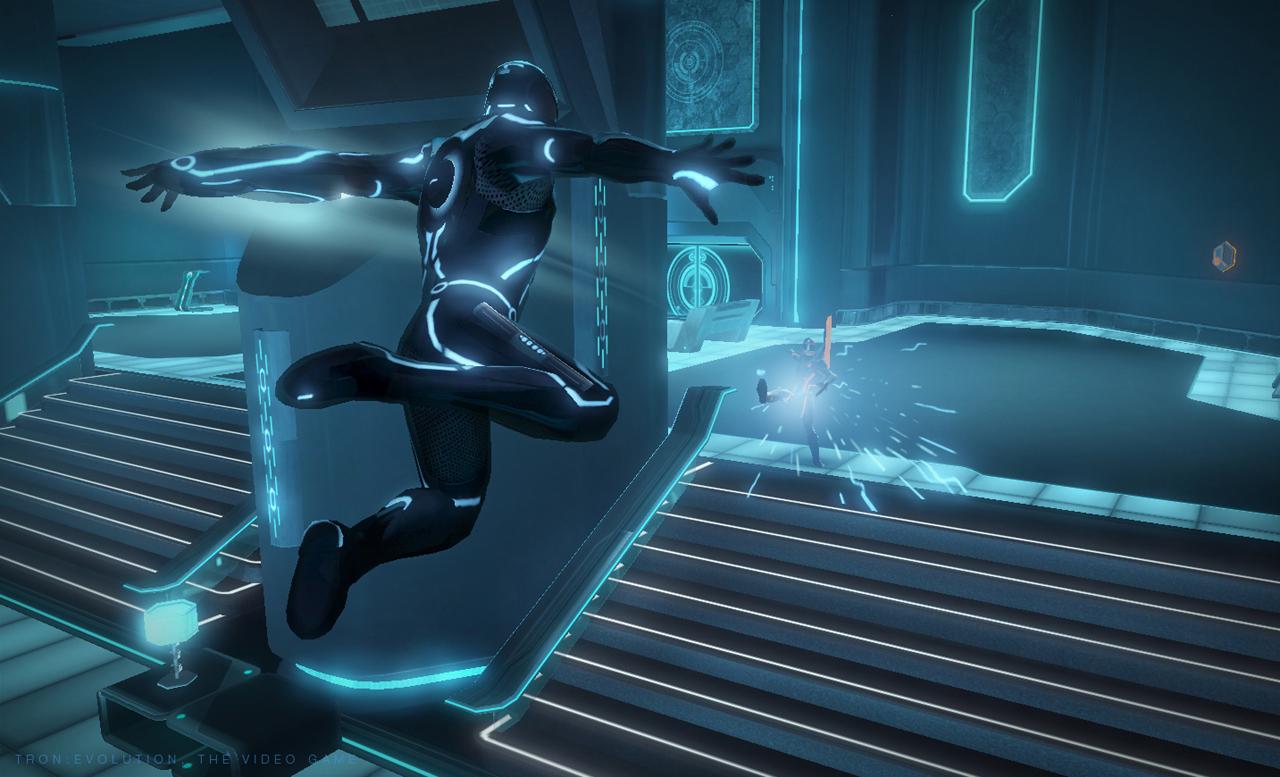
Tron Evolution Review (XBOX 360 Version)


Taking place between the original film and its 2010 sequel, Tron: Evolution attempts to bridge the gap between the two films' stories. Its story picks up a while after the events in the original (1982) film, and shortly before the events in Tron: Legacy. It details a war that breaks out between some of the original inhabitants of the grid, and a new race that has developed (referred to as ISOs or Isomorphic Organisms.) This is also where it is shown that Clu (a program developed in the creator, Flynn's image to control the grid when he is not there,) has gone rogue and is corrupting the grid and many of its programs with a former ISO turned virus named Abraxus. It is this virus that you, playing as a program referred to as 'Anon' (short for 'Anonymous,') must try to put an end to with the help of an accomplice named Quorra.

The game's storyline is primarily told through cutscenes that feature full voice over work, good visuals and some nice animation work. The voice cast is full of well-known actors, including Olivia Wylde (Quorra from Tron: Legacy,) famous video game voice actor Nolan North and Jensen Ackles (from TV's Supernatural.) They all do a good job. However, the game does a poor job of telling its story, both through the use of cutscenes and in-game dialogue, making it hard to follow. Even though I watched the first Tron film just a few days before playing the game, I was quite confused as to what was actually going on. One of the worst issues in relation to its storytelling is the fact that it shows new characters (especially the ISO race) without introducing them well, so the player has no idea of who they are, since they weren't introduced in the original film. It's a lost opportunity to help expand the knowledge of people who are going into the theatre to watch the second film, as it unfortunately creates more questions than it answers.

Evolution's gameplay is made up of various different styles. At its core, it's a third-person action game, where you must use a variety of different combo attacks to defeat enemies in closed in environments (using either your light disc or a limited amount of physical attacks.) However, there is also a lot of parkour platforming and wall-running (which brings Prince of Persia to mind,) as well as light cycle and light tank levels. There is a good amount of variety present within the campaign, which is definitely a good thing. However, there are some inherent issues within each type of gameplay that developer Propoganda Games employed.


One of the main issues with Tron: Evolution is inherent in its two main gameplay types: third-person action and wall-running/platforming. Although there are some varied attacks that you can pull off (and a lot of special attack upgrades to purchase for different types of light discs - each with their own unique effects,) the combat system is quite repetitive and basic. There are several different types of enemies, which require different tactics to defeat (due to various different weaknesses) but that's not enough to break up the repetition that comes with having to continually defeat closed in arenas filled with enemies. However, I did like the fact that it stressed strategy because you had to make sure to use the right special attacks against specific enemies, in order to not only defeat them but to bide time so you could defeat some of the other enemies around you. This is done by utilizing your different light disc types and their unique attacks. These different discs include bomb, stasis, heavy and corruption.

The platforming sections of the game require you to make perfect jumps in order to progress. A lot of them require you to jump from one wall to another, like you would in a Prince of Persia platforming-intensive game. However, it's in these segments where control issues (relating to precision) really pop up, as well as camera angles that make it hard to know exactly what direction to jump in. It is very easy to jump the wrong way due to these issues and fall to your death (which is referred to 'de-rezzing' in the Tron universe.) This wouldn't be as annoying as it is if the game had a great checkpoint system, but it has some very spaced out checkpoints at times. You'll be forced to repeat some tough combat sections in order to get a second crack at some of the platforming sections if you fall.


Visually, the game looks quite good. The environments look great and feature vivid neon colouring, making it look almost identical to the digital landscapes designed for Tron: Legacy. The character models also look quite good, resembling their counterparts from the film, and have some pretty good animations. Like its source material, Tron: Legacy, the game features some great visual effects and looks a lot different from almost anything else on the market. It also looks a lot better than most movie tie-in games, however it lacks the visual fidelity and polish that a lot of other games have these days. Still, it's a good looking game, especially considering it's a licensed product. It also runs well, without many issues with regards to its frame rate.

In addition to its 6 hour campaign, Tron: Evolution also contains a full-fledged multiplayer component for up to ten players. The multiplayer mode offers three different game types, including Disintegration (a free for all deathmatch mode,) Team Disintegration and Power Monger, where teams battle for possession of power nodes to complete a circuit and gain points. Power Monger was my favourite game type by a long shot, as it was the most creative and fun. The Disintegration modes are very basic and don't offer much in the way of creativity, so I lost interest in them quickly. The larger maps allow for light cycles and light tanks to be used, which I enjoyed using, especially in the large Power Monger games. You are able to take opponents out using the cycles, just like in the films, which is quite fun.

Players are able to level up their character through multiplayer, as well as the single player campaign. As I mentioned previously, there are tons of different upgrades available for purchase using experience points earned in either mode. The upgrades are separated into different categories and include disc upgrades, different light cycles, and your run of the mill health and energy upgrades. There is an insane amount available for purchase, and it will take you a long time to fully upgrade your program. In addition, there is a level system that goes from 1 to 50, which is integrated with the upgrade system.

Overall, Tron: Evolution is a competent licensed game and movie tie-in. Although it has some issues, it's relatively fun, somewhat interesting and a lot better than most of the rushed licensed games out there. If you're a fan of the Tron universe, then this is something that you will most likely enjoy playing through. Most of its issues are minor and do not come anywhere close to game breaking, though there are some annoying control issues to deal with. It's a decent rental that will impress you with its visual look, surprisingly deep and well-thought out multiplayer, as well as its loyalty to its source material. Though, those who prefer campaign action will need to keep in mind that the single player component is only 6 hours long, with repetitive content.

Rating: 6/10

Tuesday, January 11, 2011

Kirby's Epic Yarn Review (Wii)


In his first adventure on a major household console since 2003, Kirby's Epic Yarn finds our hero attempting to save Patch Land from the evil sorcerer Yin Yarn, who has stolen the seven strands of magic yarn that had been holding each section of that world together. It is while he's taking a stroll in Dream Land that Kirby ends up getting transported to the patchwork world, after eating what looks like a regular tomato that he has found laying on the ground. The tomato ends up being a magic 'metamato,' which allows Yin Yarn to send Kirby to the unknown world of Patch Land through a magic sock. Once there, Kirby is told about the disarray that the world is in after he meets a young prince by the name of Prince Fluff, and agrees to help Fluff save his world by returning the seven pieces of magical yarn to their respective seams.

The reason as to why the title of this game is Kirby's Epic Yarn is because of the game's visual style, as well as a reference to the stolen pieces of magic yarn that hold Patch Land together. When Kirby is transported to this new world, the entire look of the game (and its characters) changes to resemble an arts and crafts creation. Kirby, Prince Fluff and their enemies are all made out of colourful yarn outlines, and the world is a colourful array of felt, buttons, yarn and other arts and crafts materials. This unique approach to a visual style for a video game is one of the most creative things I've ever seen in a video game. Whoever came up with the idea is a genius because the look of the game (and the unique gameplay elements that come with the world's unique design,) really set the game apart from its competition. In terms of visual design and quality, this is one of the best Wii games I've ever seen in action. It looks beautiful and animates very well.

The basic control scheme is incredibly easy to use, as with most Nintendo platformers in the past. Players hold the Wiimote sideways like an old Nintendo controller and use the direction pad to move Kirby along the environments, as well as buttons 1 and 2 to control Kirby's jumps and abilities. It's a very simple and refined control scheme, but it works incredibly well, just as it has for years. Jumping is precise and the basic control scheme felt natural.

However, the developers also added several motion controlled elements to the control scheme that are sometimes more frustrating than fun. At times, Kirby will be able to transform into a variety of different things (including a train, a UFO and a surfboard) and, a lot of the time, these new transformations require players to either tilt the Wiimote or point it at the screen to control Kirby in his new form(s.) It works well for the surfboard in particular, but the motion controls make it incredibly difficult to control the train (where you have to make a continuous track for the train to follow in order to get through environments,) as well as a couple of the other new forms. It's unfortunate that there isn't a way to just use the direction pad for at least some of these segments because the motion controls can lead to a lot of frustration and may turn some people off from continuing on with the game.


As I mentioned previously, Kirby's Epic Yarn is a traditional Nintendo platforming game, however it includes some unique twists and changes. Although you're still jumping from platform to platform, avoiding or attacking enemies you meet along the way, Kirby also has some new abilities that are specific to the Patch Land environment's design. In his new yarn form, Kirby is able to throw out a strand of yarn to unravel enemies and to allow him to swing from buttons or pull squished together pieces of felt back to their original size, in order to unveil new sections of the environment. There is no learning curve attached to these abilities, allowing anyone to be able to play the game without feeling swamped by not having played video games in the past. This is especially true, considering the fact that Kirby can't die. Instead, you will lose collectible beads and gems that you have collected when you get hit, like in Sonic the Hedgehog with its rings.

The game offers co-operative gameplay, as a second player can play as Prince Fluff, Kirby's new friend. This allows players to work together to solve puzzles, find hidden collectibles and defeat enemies, as they progress through the core campaign. Prince Fluff has the same abilities as Kirby and is a great companion, as he's able to complement Kirby well. The addition of Prince Fluff allows Kirby to reach new heights and areas, as the two characters are able to stand on-top of one another. Prince Fluff is also able to help out with puzzles and control separate parts of the vehicle(s) that Kirby transforms into.

Each of the different worlds that Kirby must travel through and complete is unique in its design, various stages and colour palette. These varying environments include a world covered in ice and snow, a volcano-inspired lava world, an underwater world (complete with its own unique vehicles that Kirby can transform into,) and a traditional daytime world. All of the different worlds have their own unique gameplay mechanics and environmental hazards and designs that keep the game fresh. The game's visual design and colour palette also never becomes stale and it's these different designs that add to the game's charm. Each world has its own creative boss as well - some of which require unique mechanics to defeat, whereas the mechanics in other boss battles are somewhat basic and feel archaic. Once Kirby defeats a boss, he earns one of the stolen pieces of magical yarn and is able to use it to tie together his current world and the next one, to help him progress towards his ultimate goal.


The game's story is narrated and shown as a storybook that appeals to a younger crowd, but don't let that sway you from giving it a chance. The narrator's voice can be annoying, but he does a good job telling the story to a younger audience. In addition to this voice work, Kirby's Epic Yarn also features a good soundtrack, as well as many unique sound effects. The audio quality is quite good, meaning that it won't make you want to turn down the volume or listen to music while you play. The on-screen dialogue script has some charming and funny moments, and is pretty well-written overall.

Although the core game is only approximately 6-7 hours long, Kirby's Epic Yarn has a lot of replay value due to its scoring system, large amount of collectibles and its large assortment of mini games. As you progress through each mission, you will find tons of beads and gems spread throughout, as well as three hidden treasure chests. At the end of each level, you're scored based on the amount of beads you were able to collect. In addition, the items found inside the treasure chests can be used in the game's hub, where there is an apartment building missing all of its furnishing. Kirby is given his own apartment, which players can decorate as they see fit, but the other apartments must be decorated in a specific way in order to entice people to move in and offer mini games for you to complete. It's a relatively simple mechanic because each empty apartment has silhouettes denoting where each item is to go and it's very easy to match the silhouette with the collectible items in your inventory. Players will also be able to spend their collectible beads at one of the two stores in the hub, which sell carpet, drapes, accessories and furniture.

Kirby's Epic Yarn is an incredibly charming game that appeals to absolutely everyone - whether you're a seasoned gamer, a young child or an adult picking up a video game controller for the first time. Although it does have some challenging aspects, it does not feature a great difficulty level that would scare casual gamers off. It isn't often that you find a game like this that appeals to all types of gamers so well, without catering to one group. The old school challenge and collectible hunting is there for seasoned gamers, whereas the game's charming design, creative environments and (predominantly) simple control scheme will also appeal to the casual audience. The motion control segments may annoy some people, but they aren't game breaking by any means and are relatively short. Some of the level designs are phenomenal and the visual style is genius.

Whether you're 25, 60 or 8, I highly recommend giving this game a chance. This is one of those incredibly unique and creative games that only comes along on rare occasions. This is a game that deserves all of the attention it's been receiving because it's a gem. Despite its small flaws and traditional elements, it offers an excellent gaming experience for one or two players. Developer Hal Laboratory should be commended on their great work on this game.

Rating: 8.5/10

Kirby's Epic Yarn was released on October 17, 2010 for the Nintendo Wii.

Friday, January 7, 2011

Disney Epic Mickey Review (Wii)


What if there was a world in which forgotten Disney characters lived? In Warren Spector and Junction Point Studios' latest passion project, Disney Epic Mickey, that is the world that Mickey Mouse finds himself trapped inside. Except, instead of being a peaceful place like it normally is, the world has been attacked by inkblot monsters, who have begun to destroy the beautiful colours that the world one had, using paint thinner. The world of Wasteland is in disarray and it's up to Mickey to restore it to its original glory (if he chooses to do so.)

As Mickey slumbers in his bedroom one night, he is awakened by noises on the other side of his wall. After inspecting the area and climbing through a mirror on his bedroom wall, Mickey finds himself in magician Yen Sid's workshop, watching him apply paint to what is seemingly a very detailed map of a fictional world. However, when Mickey approaches the painting and decides to do some of his own painting after Yen Sid has retired for the night, he accidentally knocks over a cup of paint thinner. Little does he know of what he has done to the world of Wasteland, until an inkblot monster kidnaps him days later, and drags him into the map.

As mentioned before, Wasteland is a world where Walt Disney's forgotten creations live their day to day life in obscurity. Their leader is Oswald the Lucky Rabbit, the first character that Walt created, whom he lost to Universal Studios in a rights battle shortly afterwards. Mickey Mouse was created as a replacement and Oswald resents him for that, especially since Oswald never really saw the light of day as a Universal character. It is Oswald's plan to trap Mickey Mouse in Wasteland forever, so that he will be forgotten as well. As the game progresses, Mickey will befriend the inhabitants of Wasteland, and will be tasked with helping them defeat the evil inkblot and his minions, in order to restore Wasteland to its original glory.

At its core, Disney Epic Mickey is a traditional platform action game (like Banjo-Kazooie from the N64 days,) with role-playing elements. Players are able to use paint or thinner to help solve problems, complete quests and 'defeat' enemies (which can be done either by using paint to make them friendly or by using thinner to make them disappear.) Players progress through the environment and must use paint to restore missing bridges, walkways, or ledges in order to move forward. The control scheme is quite basic, and allows you to control thinner with the nunchuk and paint with the Wiimote, although it takes a bit to get used to. In addition to being able to use paint and thinner on walkways, ledges and the environment, players can also help restore the buildings throughout Wasteland that have been hit by thinner and have sections which have completely disappeared.

This gameplay mechanic sets up the game's moral choices, which allow gamers to decide whether they will help the citizens of Wasteland or whether they will ignore them and use thinner to finish quests and boss battles faster. Bosses such as the 'It's a Small World' clock tower can be restored to their normal, peaceful selves with the use of paint, but it involves more effort and results in a tougher battle, whereas thinner can defeat bosses in a much faster and easier manner. Players will be enticed by bonuses for using thinner, so it becomes a tough decision, especially when the game rewards you with a larger carrying capacity for whichever one you decide to use. At the end of the game, players will be shown what they have done to the world and its people, through a long cutscene.


Wasteland is made up of several adjoining worlds taken from Disney lore. The main hub of the game is Main Street, but most of the adjoining worlds also have mini-hubs. In the hub worlds, players are able to talk to the townspeople, take on quests, visit stores and help to restore the environment (using paint and thinner appropriately.) As Mickey collects missing power sparks by defeating bosses or completing quests, he is able to travel to new worlds through projector screens set up at the end of Main Street. These projector screens allow Mickey to travel from one world to another - most containing their own mini-hub world, such as Adventure Land, Bog Easy and Gremlin Village.

The most inventive and interesting worlds are the classic Haunted Mansion, as well as an incredibly creative new addition known as Mickey Junk Mountain. As its name suggests, Mickey Junk Mountain is a mountain range where forgotten Mickey Mouse merchandise is piled all around the environment and must be used as ramps, floating platforms and ladders to help Mickey make his way up the mountain. It's amazing being able to walk amongst classic Mickey merchandise such as the Mickey Mouse phone, Nintendo and Super Nintendo games, and even Mickey Mouse pesticide. Seeing the old Magical Quest Starring Mickey Mouse Super Nintendo cartridges was a very nostalgic feeling for me as it was the first game I ever purchased and one that I played a ton as a child. It's details like this that make you respect the great attention to detail and the insane amount of research that Warren Spector and his team put into this game. It clearly was a passion project.

Another one of the great and charming aspects of the game is the fact that each projector screen contains its own mini travel level modeled after classic Mickey Mouse and Oswald the Lucky Rabbit cartoons from decades ago. When Mickey enters a projector screen (which is required to progress to different sections of each world, as well as back to the main hub,) he enters a 2D platforming level. Each of the main worlds generally has one cartoon split into at least three different 2D sections, as its travel levels. These are some of the most innovative, interesting and charming parts of the game, and are sure to appeal to Disney lovers of any age. Being able to play through cartoons such as Steamboat Willy, The Mad Professor, Fantasia and Jungle Rhythm, is an ingenious addition to the game and it helps add variety to the core gameplay, which can get a bit repetitive and tedious at times.

Characters that you meet along your journey will offer insight into the state of the world and will also give you side quests. These quests can range from very basic things such as finding a book that was lent to someone or finding out who stole something, to more involved quests such as putting a halt to mischievous ghost activity in the Haunted Mansion's library. Generally, the quest types are varied enough to prevent repetition, but there are several that are quite similar. A bright spot is the fact that you will sometimes there will be two sides to a quest, resulting in the necessity to make a moral choice. You will also find collectible pins scattered throughout the environments (which can also be earned for doing specific tasks,) and pieces of popular animatronic Disney characters Daisy, Goofy and Donald.

The game's structure works quite well and is quite varied, which is nice. However, quests can sometimes be very vague, which can lead to frustrating moments. Another issue in relation to quests is that there is no indicator as to which characters have new quests to give you, so you will spend a lot of time talking to each character over and over again in order to see if they mention that they need your help with something new. Although this isn't a huge issue, it can be somewhat annoying at times. I wish they would have placed some sort of a graphic indicator over characters who have new quests to share, to make it hard to miss new side quests.


Visually, Disney Epic Mickey has a vibrant colour scheme and detailed graphics during gameplay and cutscenes. Each environment or level has a different colour palette and features good texture work. Mickey Mouse and the other characters within the game are detailed, very recognizable and animate well. However vibrant and interesting the game looks, its graphics tend to also look outdated based on the fact that the Wii's hardware just can't compete with the high-definition graphic capabilities of the other gaming consoles. Then again, this does look better than a lot of Wii games, so that's definitely nice to see. In my opinion, beautiful graphics are not a requirement for a game to be good (or even great,) but they're a nice bonus. It is interesting to note, however, that Epic Mickey began its development as a multi-platform game, although the other versions were cancelled.

The game runs well, without many hiccups, but it does have a frustrating camera. Like other games of its ilk (namely ones from the N64 era,) the main issue with the game is unfortunately its camera, which makes it hard to see where to go next at times. It's an issue that most gamers are used to dealing with and is not game breaking, but it can be annoying. Manual camera control is helpful and necessary. Just be prepared to have to adjust the camera on a regular basis, especially if you want to see quest items or important things above you. Manual camera and viewing control is available but it can be finnicky at times. This sometimes makes it difficult to paint exactly where you want to, especially if it's above you.

Although there isn't any voice over work in the game, characters have their own different noises that they'll make. Quests and dialogue will be given to you in thought bubbles during cartoon-inspired cutscenes. However, Junction Point Studios' went to a lot of effort to have an amazing original orchestral score done for the game. It's really good, especially during some of the travel levels inspired by different cartoons such as Fantasia. The game also features a myriad of different sound effects that sound quite good and like they fit in with the actions.

Overall, Disney Epic Mickey is a very creative game and, although it has some issues, is well-worth playing. It is a great addition to any Disneyphile's collection, but it should be noted that some of the subject matter is quite dark, so it could scare young children. Unfortunately, it fails to reach the great heights that pre-release buzz promised it would attain. It has some issues and its core gameplay can become somewhat tedious at times, especially since there's a lot of traveling back through the same environments over and over again, but it's still very charming. It is easy to tell that Warren Spector and his team put a lot of love and effort into this game and it's worth at least a rental just to experience all of the Disney charm and nostalgia that they infused into this game.

Rating: 7.5/10

Disney Epic Mickey was released on November 30, 2010 for the Nintendo Wii.

Tuesday, January 4, 2011

Splatterhouse Review (XBOX 360 Version)


A re-imagining of a classic Sega Genesis franchise, 2010's 'Splatterhouse' is a gory beat-'em up with infused horror elements. The game once again follows the series' main character, Rick (and his mysterious mask,) as he tries to save his girlfriend from the maniacal Dr. West, who has made a pact with the underworld and has summoned all sorts of heinous creatures to stand in your path. What ensues is an action-packed brawler that features more violence than almost any other game I've ever played prior, as the mask transforms Rick into a hulking monster himself.

The game's design brought me in mind of the old beat-'em ups that I used to play a lot on the Nintendo 64 and Playstation. It mainly takes place in a fully 3D environment, where you have to clear rooms of enemies either by using your fists, various weapons, or enemies' dismembered arms of heads. Like in the Devil May Cry series, many times doors will be blocked by spirits that will not let you past until you defeat the various enemies set against you. Although it's a very basic design that doesn't push the envelope in this age of high-definition, open-world gaming, it's still quite fun and pays homage to past years where these games were popular.


Although it's primarily a three-dimensional brawler, developer Namco-Bandai Games did a great service for fans of the old-school Splatterhouse trilogy from years ago. In an attempt to break up the game's style a bit to avoid repetition (and to pay homage to the series' past,) they included the occasional section where Rick will drop into a 2D environment. In these parts, the game's camera becomes fixed from outside of the environment and Rick must walk from left to right (in side-scrolling fashion,) pummeling enemies and avoiding obstacles such as spikes. It feels a lot like the original games and is a nice change of pace. Those parts were one of the most fun aspects of this game in my opinion.

In addition to its eight hour campaign, Splatterhouse not only includes several different challenge rooms, but it also contains unlockable versions of the original three Splatterhouse games (including an uncut version of the original.) These inclusions add a lot of extra gameplay and will keep you hooked for longer than eight hours. The challenge rooms themselves take a while to master because you have to beat each in a certain amount of time in order to earn a gold medal, while ever increasing amounts of different enemies attack you in waves.

The game controls pretty well, for the most part, although there are some issues where it lacks precision. Gameplay relies upon light, heavy and grab attacks, as well as the odd quicktime event (where you have to press a series of buttons to finish off a boss, for example.) Combos, dash moves and upgrades can be purchased through an in-game upgrade menu (where you essentially use the amount of blood that you've spilled to buy things.) Different attacks work well against each type of enemy and, on harder difficulties, the roll button is incredibly useful, especially against larger enemies such as the giant worms that you face sporadically. Despite the lack of precision at times, it's not that hard to pull off the moves that you want, so it doesn't ever become overly frustrating due to poor control. There is a lot of variety in the combat too, so it's fun to try to master different moves.

The mask also gives Rick a myriad of different abilities, including berserk mode. When you've gained enough rage (also earned by spilling a bunch of blood,) you are able to utilize this move to increase Rick's brute strength. There are also abilities where you're able to pull out long blades attached to Rick's arms, in order to decapitate and dismember enemies' body parts. Both of these rage moves allow you to take out large groups of enemies within quick succession and help you earn achievements along the way.


The game's visual style incorporates elements of cel-shading, but also more realistic visual elements. The character models are pretty well-designed and animate relatively well, although some animations aren't that fluid. One thing I liked a lot about the character model of Rick is that, as he gets injured, his body starts to deteriorate (skin falls off the bone, injuries appear, etc.) That was a nice touch.

The environments surrounding the insane action are always varied, detailed and employ the use of some good looking textures. This isn't a game that will make you want to have a top of the line high-definition display, but it doesn't look bad by any means. Then again, some of the visual fidelity in the environments tends to get lost at times due to the insane amount of blood. Each location has its own style and that prevents the game from looking stale or boring after a while. There are some frame rate issues and brief stuttering when you move the camera around the environments, but it doesn't affect the experience much.

Splatterhouse is a very campy game that doesn't take itself seriously and that is very evident in the writing and voice overs. Dr. West is a classic mad scientist character who's evidently insane, but it's the mask that steals the show with a ton of hilarious one-liners. He chimes in every so often. The audio sounds pretty good overall, but the soundtrack audio quality could be a bit better. The game's soundtrack is comprised of different heavy metal songs that play throughout the experience.

If you're a fan of the series, or a fan of this type of game in general, then you will find a fun experience within the confines of this game. However, it is definitely not for everyone due to its over the top graphic gameplay and character designs that may disturb younger players. It's a very traditional game that doesn't push the envelope much at all, but it's a fun romp that brings back nostalgic memories. Plus, you can't go wrong with the inclusion of the three classic Splatterhouse games, which are unlocked as you progress through the game. Collectible lovers will enjoy the fact that there are various (nude/sexual in nature) photographs of Rick's girlfriend spread around the environments for you to find pieces of.

Overall, I enjoyed Splatterhouse. It has some issues, but it was fun to play through and ended up being a good challenge on hard. I'd never played much of the original games in the past, so it was great to be able to play them in order to see why people loved them so much, and why they were cult classics. It's nowhere near a game of the year contender, but it's a decent (and underappreciated) game.

Rating: 6/10

Splatterhouse was released on November 23, 2010 for the XBOX 360, PS3 and PC.

Sunday, January 2, 2011

Mafia II Review (XBOX 360 Version)


Developed by 2K Games' Czech Republic studio, Mafia II is a sequel to the hit PC/XBOX game (Mafia) released in 2002. It is a stand-alone story, that follows Vito Scaletta as he comes back to Empire Bay (which is basically a digital re-imagining of New York City,) after fighting for his country in the Second World War. Upon his return, Vito is reunited with his old pal Joe, who helps Vito find work with the mafia. What follows is an intriguing, entertaining and very well-written story about Vito's rise within the mafia organization and major events/issues that arise along the way. The game's storyline takes place over two decades - the 1940s and the 1950s.

Throughout the game's 15 hour campaign, you will meet many interesting characters and will be put in a myriad of different situations, ranging from taking someone out, engaging in a shootout, stealing documents from a hospital or helping a colleague dispose of a body. The game is very story-driven and, because of that, its design is incredibly linear. Because of the great emphasis on keeping you in the midst of Vito's story, the game doesn't really feature any side missions or anything to do in terms of free roaming. I honestly didn't mind that because I was so engaged in the storyline and what was going to happen next, that I just wanted to keep playing the main missions anyways. Personally, I think it was a good design choice because there were no distractions and the story grabbed me from the start and didn't let go until its grand finale. I also liked how the developers added a level where you play as Vito during his time fighting in the Second World War.

Mafia II plays like most of the other open-world crime games, as in Grand Theft Auto. It's very traditional and doesn't push the envelope much, but it's quite fun and doesn't have many issues. Using cover during gunfights is integral to staying alive and the cover mechanics work quite well. The shooting mechanics are also quite good and are easy to get used to (and are superior to the average sandbox game's shooting mechanics.) It also features a robust fist-fighting mechanic, which can be engaged by shoving an opponent. It allows for more realistic fighting, including the ability to evade, block, throw two different types of punches (varying in strength) and counter-attack.

There is also a great emphasis on driving. Although these types of games traditionally involve a lot of travel across their large maps, Mafia II involves more travel than usual. It's something that may turn some people off, but it didn't bother me too much. I liked how the driving physics changed based on the type of weather (for example, roads were slippery during the winter season which was prevalent at the beginning of the game.) The cars primarily handle pretty well, but the driving physics can be a bit floaty at times and it can be hard to turn at fast speeds. However, you're driving cars from the 40s and 50s, so it's understandable.


Visually, the game is quite impressive. Empire Bay is very detailed and feels lifelike. The texture work and attention to detail is impressive, as is the fact that the environments are very destructible. The character models, their expressions and animations are also well-done, and it honestly feels like you're watching a movie at times. Overall, the game runs quite well, but it does have a few frame rate issues (which I noticed primarily while driving, but it wasn't very frequent.) There isn't much in the way of character customization, but you can decide to change Vito's clothes if you'd like (clothes can be bought at stores throughout Empire City.)

The game's dialogue and story are very well-written. The characters are believable, interesting and well-rounded. You really get to like Joe and Vito a lot, even though they have issues. It doesn't hurt that the voice acting is top notch, with strong performances from the entire cast. It honestly feels like a good, interactive mob film (one of my favourite genres.)

What really impressed me about this game was the great attention to detail that 2K Czech put into the game. As I mentioned before, the world looks great and has a lot of detail, but it's not just that. Each decade that the game takes place in feels different and has subtle changes (as well as major changes because the models of cars available change as you progress. More become available once you hit the 1950s.)

In addition, the driving is also more realistic than usual as you will die if you get into a front end collision at a high speed. The cops are very prevalent and will start to chase you (in an attempt to pull you over and fine you a certain amount of money, which you can pay or resist,) if they notice you speeding, driving away from a collision or hurting civilians. They, along with enemies, can also shoot you through the back windshield of your car as you drive, or blow the tires with a well-placed shot. If you're wanted and escape, the cops will keep record of your car and your appearance, so you're forced to change vehicles and/or your clothing to get them off of your back. The cops will also do their best to stop you from escaping if you rob a gun store or a clothing store.


2K Games formed a partnership with Hugh Hefner and his Playboy enterprise for this game. With this partnership, 2K Czech scattered various Playboy Magazines throughout Empire City, for players to find. Each time you find a magazine, you will be able to browse an image of a centerfold from the eras in which the game takes place. Be warned that there is nudity.

Mafia II is not an easy game but it's not frustratingly difficult either. I played it on hard and found it to be a good challenge. You have to rely on your cover during a gunfight because one well-placed shot at a close distance can take you out. In general, it doesn't take a lot of hits to kill Vito. Conversely, you must make sure to be strategic with your shots in order to quickly take out your enemies in an efficient manner.

Overall, Mafia II is a very strong game. In fact, it's one of my favourite releases of the past year. Not only is it fun to play, but it's so immersive and interesting that it hooked me from start to finish and I had a lot of fun playing it. It gets a bit of a bad rep for not having much in the way of side missions but I think it works better without them, because the story never lets up. If you're a fan of open-world sandbox games of this ilk, then it's definitely worth checking out.

Rating: 8/10

Mafia II was released on August 24, 2010. It is available for the XBOX 360, PS3 and PC.

Friday, December 31, 2010

Doritos Crash Course Review (XBOX Live Arcade)


Throughout the last while, Doritos held a competition for independent developers, where they would compete to see who could create the best game(s.) Out of the two winners, one was Crash Course, which they released on XBOX Live Arcade for free in early December. It is not only an incredibly nice gesture and gift, but it's also an excellent marketing idea employed by Doritos (who have done this before with the release of Dash of Destruction a couple of years ago.)

Crash Course is pretty much exactly what it sounds like. It's a game where you run your personal avatar through insane obstacle courses that are suspended in the air above water. There are three different continents (U.S.A., Europe and Japan,) with five courses each. Each course is full of different obstacles (which keep getting tougher as you progress,) including trampolines, swinging hammers, metal presses and collapsing floor panels. Your objective is to get to the end the fastest way possible, without being hit, flattened or falling into the water. Luckily, there are checkpoints after each section, so it's not overly frustrating and allows you to focus on each section as they come, in order to get better.

The control scheme is very basic. All you really need to do is run (RT,) jump (A) and be able to move, climb and slide (using the left joystick.) It works very well and is quite tight. In the time that I've spent playing the game, I haven't had any issues where the controls made me screw up, which is nice. Normally, controls can be hit or miss in this type of game.

Although its visuals aren't anything to write home about, the game looks decent overall. It has some okay texture work and detailed backgrounds that set each continent's venues apart. For example, there's a background for a USA course that features King Kong attacking a building. The backgrounds are the best visual aspect of the game because most of the courses look alike, apart from different colour schemes based on which area you're in.


As its description suggests, Crash Course is a challenging game. It has a great, subtle learning curve, though. As you progress through the United States courses and onto the other two continents, you will become familiar with the game and will be able to handle the tougher obstacles and courses in general, without feeling like the game ramped up the difficulty far too fast.

Crash Course has full leaderboard support and online multiplayer, although it's very basic. When you play against friends or other online foes, you will only see a cardboard cut-out of their avatar being flown around the course, in conjunction with the speed/efficiency that they are traversing the obstacles. It's funny at first and works quite well, but it's just as fun to compete against your friends' times through the leaderboard than it is in a versus race.

Overall, Doritos Crash Course is a really fun, challenging and hilarious game. It's very simple in design, but they did a good job developing the game and its control scheme. It's a great addition to your XBOX Arcade game collection, especially since it's free. This is a game that you do not want to pass up on downloading because who knows how long it will last (previous free games were deleted after specific periods of time.) Make sure to play it with friends (or challenge friends online,) because that's where the game really shines.

Rating: 7.5/10

Doritos Crash Course was released on December 8, 2010, for the XBOX Live Arcade. It is free to download.