An often updated video game review blog. Reviews encompass all major consoles and portable gaming handhelds.
Monday, March 7, 2011
Torchlight Review (XBOX Live Arcade)
Released in October of 2009, Runic Games' Torchlight is a popular dungeon-crawling action role-playing game, which is being released on XBOX Live Arcade this week. It is one of the major releases in Microsoft's XBOX Live Arcade House Party promotion, and they are acting as the publisher for this outing. I know that many people were very happy when this version of the game was announced, as it's been speculated since the PC version was originally released - I know I was. Is this version worth its fifteen dollar price tag after being ported from the confines of the computer gaming world?
The game takes place within a mythical world, in a popular mining town known as Torchlight. The mines below the town are full of a highly popular material known as ember, which has attracted many adventurers to the town, who are seeking fame and fortune. The character you play as has been invited to the town, where he has been enlisted as help by a mage known as Syl, whose master Alric has disappeared into the mine's depths. After his disappearance, her peer Brink went in to look for their master and has yet to come back from his dangerous quest. You see, the mines within Torchlight are not only full of ember, but they're also full of dangerous monsters.
As it turns out, the highly sought after ember is not just popular - it's also dangerous in an elemental fashion. Its effects are the reason why past civilizations fell and its allure is what has driven Master Alric into the mines, as he is in search of something that will make him more powerful - something that will allow him to rule with his dark master. Said dark master is hidden on the thirty-fifth floor of the mine, where he has been slumbering for many years. It is your responsibility to try to stop the master from making his return to the world of humans, by defeating all of the heinous creatures that stand in your way. It's you and your pet against the horde.
At the beginning of the experience, players are asked to choose the class of adventurer that best suits their play style and personality. The choices include: the Destroyer (a warrior, skilled in melee combat and the summoning of ancestral spirits,) the Alchemist (a mage, who is fluent in using magical elements for combat such as electricity,) and the Vanquisher (an elite city guard, who uses her knowledge of traps and ranged weapons to her advantage.) Each class allows for a new take on combat specialties, abilities and the overall style of gameplay. Since I've always been someone who enjoys hacking and slashing my way through enemies with melee weapons in video games, I opted for the trusty Destroyer. He served me well and fit my play style perfectly.
It is at this time that you also get to choose a pet, which will be your ally, extra storage and potential spellcaster throughout the game. There are three preset pet types, including a dog, cat and dinosaur. I chose the cat. This pet helped me out a lot during my experience in the dank, dark dungeons underneath Torchlight, in many ways. Not only did he constantly rush into battle with vigor, but he also learned spells which helped maintain both of our health and assisted him in combat against the dungeon lurkers. The best part about having a pet in this game however, is the fact that he can store your unwanted items, with the ability to make a run to town for you to make sales, whenever need be. Granted, there's a short wait of about a minute and a half and some limitations are levied upon this ability, such as the fact that he can't be sent out while you're in certain sub-portals. Those limitations are rarely ever levied upon you though. Fishing holes are available in some locations, allowing you to catch different types of the slippery creatures, which can then be fed to your pet to alter its appearance, skills, and weaknesses. Who doesn't want to temporarily have a huge spider or a flaming beast as an ally? At least, within the confines of a virtual environment.
For those who are still wondering, Torchlight is a single player only experience on the 360, just like it was when it was released for PC and Mac. The campaign is a very solitary experience, but I found that that dynamic lent itself well to the game's story and campaign. I didn't pine for another adventurer at my side, although I'm sure it would've been fun. Perhaps we'll see that in Torchlight 2, which has been rumored to be in development. I know that a lot of people have been asking about this, so I wanted to make sure I made mention of it. Runic Games did incorporate a new gifting ability into the game, which allows you to send a gift message to a friend, granting them with a spell that will let them re-assign skill points. You can earn it for your own character, by sending the message out. This is exclusive to this XBOX Live Arcade port of the game.
As your chosen character, you must fight your way through the dungeons using either melee combat, spells, traps or ranged attacks. Hundreds of times throughout the campaign, you will come across different weapons, armor, jewelery and gems, which can be used to add elemental skills or stat-related bonuses to your equipped items. If I must say so myself, Torchlight is a loot-lover's dream. Each item you find can be equipped or sold, with visual changes appearing to your character when you upgrade or change his equipment. Sometimes you will be faced with a tough decision as to whether you keep a lower ranked weapon with great elemental enchantments/skills or whether you go with a more basic, but higher ranked item. There are a lot of options which allow players to customize their characters through their equipment. You spend a lot of time in the game's menus, but they were quite easy to navigate for the most part, so I didn't find that to be much of a problem.
Each new floor of the game's deep, thirty-five level mine/dungeon presents new puzzles, enemies and tasks for you to concur - not to mention the occasional big boss battle. The game is constantly introducing new baddies into its randomly generated dungeons for you to slaughter with your blades, staffs, guns or spells. This helps keep the experience fresh, as each enemy has a different weakness and its own set of abilities. Runic took it upon themselves to not only name each of these creatures, but to add a list of these skills under each one's health bar, which I thought was a nice touch. That way, you always know what you're up against in each encounter. Although, even though you know the enemies' abilities, it doesn't make you invincible against them.
Although the dungeon's depths are all randomly generated, the game does a great job of creating its content. Reason being is that it has a lot of variety to work with. After every few floors, the look of the dungeon and its environments change drastically, ranging from a traditional gray mine, to a library, jungle, prison and what looks like the inside of Hell itself. Each of the aforementioned environments adds subtle changes to the experience, such as user-controlled bridges (which usually lead to secret stashes of gold) or portals that will send you to a brand new section of the floor. This variety was welcomed.
As I previously mentioned, Runic did a great job by throwing everything but the kitchen sink into this game, when it comes to enemy designs. There are so many different enemies and variations that it's hard to even make a list of them all. Some of my favourites included large dragon spawn, spiders of varying sizes and little demons. Almost every enemy featured its own unique identity and skillset, but there were several different incarnations of some types. These different incarnations of enemy types would always look different on each of the different floors however. For example, some of the little demon henchmen on the jungle floors wore loin cloths and had spears. As I progressed further and further into the abyss, I discovered tougher enemies who would even kamikaze me. Unfortunately, despite the creative boss designs, their mechanics were quite similar and they didn't require a lot of skill or added technique to take down.
The town of Torchlight serves as the game's main hub. Within its confines are many different vendors, such as those who specialize in certain things, gamblers (who charge for unknown weapons,) and an enchanter who will place magical spells on your weapons to grant them new abilities...for a high price, of course. Additionally, this is where you go to find villagers who are offering side quests. These quests range from separate portals containing a specific desired item, a robot who wants to blog about the mini-bosses you've slain and a couple of townsfolk who need specific types of jewels. These side quests add variety to the campaign, allowing for some extra content, exploration and rewards. Although they don't change the core dynamic of the game very much.
Once you've completed a section of the game's main dungeon, you will be presented with a waypoint portal that will send you back to the main town hub. These portals act as checkpoints, and can always be used from the main portal within the town of Torchlight. You are not able to pick exact floor numbers, but these checkpoints are spread out well throughout the cave. There are several of them, in fact. However, being able to warp back to town is never a problem, as it is easy to find town portal scrolls (whether they're dropped by enemies you've slain, found on tables or discovered in chests,) which will allow you to create a travel vortex at any point during your travels. You can return to the exact same location via that portal, once you're finished in town.
This is a game that constantly rewards players for their efforts - primarily through loot, but also through experience and fame. You always feel like you're accomplishing something when you play this game. Exploration is rewarded by hidden troves of gold and treasure chests (although you must beware the mimic chests which are actually strong enemies.) On the other hand, combat is rewarded handsomely with experience points, new skill points to award through your discretion and fame points. Like with all role-playing games, you level up at certain experience intervals.
Torchlight allows you to direct the skill points you've earned (several per each new level) into the categories that best suit your play style. Additionally, this port features all of the skills that were available in the original version, allowing you to choose which ones you would like to assign points to and/or use. Some of them have been tweaked a bit from their original designs to improve their effects. The aforementioned fame points correspond to a long list of fame levels, which show how popular you are as an adventurer within Torchlight and its surrounding area. You earn different amounts of XP based on the difficulty level that you choose - ranging from very easy to very hard, and also including a hardcore mode where death is permanent (instead of the ability to respawn in town, at the start of your current floor or at the section where you died. You can lose gold, fame and experience based on where you choose.)
In order to optimize the experience for console gamers, developer Runic Games changed the on-screen hub design for this version of the game. Instead of your health and mana being shown at the bottom of the screen in a large menu, each one is triggered to a shoulder button and shown in one corner. Health is in the top left-hand corner of the screen (mapped to LB for potion use,) and mana is in the top right-hand corner of the screen, mapped to RB for its potion use. In comparison to the PC version's hub, I found this one to be a lot better and easier to use. It was much easier to see how high or low my health and mana were, and it was simple to use a potion at the press of a button. The developers also went a step further in allowing spells and abilities to be mapped to four buttons: Y, B, and both trigger buttons. This made it very easy to use them as well. The left joystick controls movement, whereas the right joystick allows you to zoom the camera in and out. Additionally, the X button controls all of your combat. Overall, I was very impressed with how they optimized this port for console players' enjoyment.
Although I was quite impressed with this game, it was not without problems. Through its Diablo-like structure, Torchlight's gameplay was repetitive in its basic structure. Fans of dungeon crawlers and loot will feel right at home with this game, but it may not be for the more traditional gamer. I'm somewhat new to this type of game, having only played Diablo a bit in the past, but I enjoyed it quite a bit despite its repetition. Runic included a lot of variety and content to combat this well-known issue within the game's sub-genre. If you're not sure about this type of game, then just give the trial a chance.
The main issue with the game is its frame rate. When a lot of different enemies are on the screen, it can slow down quite a bit - sometimes even to a crawl. This seemed to happen the most when a few larger spider enemies were on the screen with their individual legs moving, or when enemies used varying elemental attacks at once. During periods of intense frame rate slowdown, the game was made difficult to play because it became tough to know which enemy I was attacking and/or exactly where I was if I was crowded around by large enemies. Things would be fine when I was fighting a large group of basic enemies, but the more complex character models (such as the large eight-legged freaks) required more from the game's engine and thus seemed to be the cause of a lot of the slowdown. I was impressed with how many enemies they could fit on the screen at once, but it's too bad that it suffered from these occasional frame rate hiccups. Granted, they weren't very prevalent.
Torchlight is never a game that will blow you away with its shiny graphics, but the game does look quite good. The art design is very well-done and the game features a great variety within its visuals. Its art style isn't as serious as other RPGs, but the art department did a good job creating a unique visual style for the game that is a nice mix between realism and a more colourful and surreal style. Its texture work looks pretty good and its enemy designs deserve to be commended. I was also quite impressed with how the look of my character changed as I switched his armor and weapons. It's just too bad that the game doesn't run as well as it looks, at all times.
In terms of audio, I was impressed for the most part, but there were some cons. The game's soundtrack (which was composed by Diablo composer and audio designer, Matt Uelman,) was subtle but powerful and worked well with the game's dark and gritty tone. The inherent sound effects were also pretty well-done, with some nice variety. However, I wasn't as impressed with the game's limited voice acting. Some characters sounded okay, but I found that their audio interpretations of what the characters sounded like were somewhat stereotypical and uninspired. Since the game doesn't feature any cutscenes, the entire storyline is told through dialogue, whether it's scrolling text shown before a major event or within a discussion with an A.I. Torchlight inhabitant. While most of the dialogue was pretty well-written, the story was quite basic and wasn't as developed as I would have hoped.
In conclusion, I must say that Torchlight lived up to some high expectations I had going into the experience. I had heard a lot of good things about it in the past, so I was glad that it lived up to that hype. Although it's somewhat repetitive in its design and has some small issues, Torchlight is an impressive game that is sure to impress those who give it a chance - granted they like this type of dungeon crawling RPG. Its wealth of content and loot is sure to impress, with hours of gameplay through its main campaign, plus the ability to continue on after completion in its never-ending dungeon or through side-quests. I played through the campaign on normal, which took several hours, but should have started on hard to make it more of a challenge and a longer experience. The new game plus mode allows you to gift one of your high-level items to a new character, which is sure to please fans of the genre. If what I wrote interests you at all, I definitely recommend giving it a chance (at least the trial version.) Torchlight is a well-made game that does a good job crafting its own identity in a genre that Diablo has made famous. It's a good deal at $15 and can provide hours of enjoyment, especially if you love collecting loot.
Rating: 8/10
Torchlight will be released on XBOX Live Arcade on March 9, 2011. It will be available for 1200 Microsoft Points, which equals out to fifteen American dollars.
Saturday, March 5, 2011
Test Drive: Unlimited 2 Review (XBOX 360 Version)
One of the world's most popular racing franchises has made a return to video game consoles with Atari's latest release, Test Drive Unlimited 2. It is the seventeenth installment in the long-running franchise, which dates back to 1987, when publisher Accolade released the original Test Drive. Developed by Eden Games, this sequel to the 2006 installment, Test Drive Unlimited, allows gamers to race along dirt and paved roads on the beautiful island oasis of Ibiza and Hawaii. It's an ambitious title, but how does it stack up against its predecessor and other games within the racing genre?
What sets the Test Drive Unlimited games apart from the other racing games that are currently out on the market is its design. Not only is Test Drive Unlimited 2 an open world racing game that mixes traditional racing with off-road racing well, but it's also a massively multiplayer social gaming experience. That's right - not only can you race against opponents online, but you can also interact socially with them, in clubs, car shops, and even a casino (which requires the purchase of a separate downloadable add-on.) With this release, the massively multiplayer online aspects of the original Test Drive Unlimited are expanded upon and fine-tuned, allowing for a more social experience.
Test Drive Unlimited 2 is a new game which acts as a sequel, but it also incorporates many elements of the first game, making it feel like a combination. Instead of just having the game take place on the new island oasis of Ibiza, Eden Games went the extra mile to also include the island of Hawaii which was the backdrop of the original Test Drive Unlimited. Whereas its predecessor featured 1600 km of roads to traverse, Test Drive Unlimited 2 features a whopping 3290 km of roadways. It also features a full career mode, as well as 100 different instant challenges (escort missions, shadowing challenges, speed limit challenges and some others), cop and outlaw chases, plus online ranked matches.
Players can drive around both islands, engaging in single player challenges and competitions, as well as any sort of multiplayer driving they fancy. That is because, like the original game, Test Drive Unlimited 2 allows players to create multiplayer challenges at any time by flashing their headlights at other players when they come across their peers on the open roads. Challenges can be set up on the fly and cooperative driving is also available, allowing players to enter the cars of others, acting as a passenger and navigator. Each island has its own Community Racing Centre where players can post created challenges. Gamers can also set up clubs with their friends, allowing each member to donate money to the common goal and also giving members the opportunity to compete against other (rival) clubs.
At the beginning of the game, gamers are asked to choose an avatar from one of several options, including characters of different ethnicities and genders. This avatar is to be their representation in the game world. There is never an option to change your avatar selection, but you are given the freedom to customize this character in many different ways. Customization shops such as hair salons, plastic surgeons and clothing stores are spread out throughout the game world, providing players with the opportunity to customize their avatar in any way they see fit. Like in real life, it all costs quite a bit of money, but those who like to customize their video game characters to closely resemble their real-life appearance will love these options. I was impressed with the wide variety of customization options available, as well as the realism involved when your character is forced to wear bandages for a while after undergoing a procedure. This is one of the more customizable games I've played.
Players can visit real estate agencies to purchase houses, though this is mainly done for garage spots. In order to purchase a vehicle, you need to make sure that you have a spot in a garage for it. These houses are ranked in different categories (via a star-based rating system,) and each category has its own price ranges. You can visit these houses at any time, with the ability to change clothes, check your TDU Live stats or check the news. Some customization is available for chairs and fabrics, but that's about it. These houses are mainly in existence for storage, allowing you to view your cars (and a vehicle list) and choose one to drive.
After choosing an avatar (which is done during your poolside birthday party on a patio in picturesque Ibiza,) you are whisked inside to see your new birthday gift from a friend, which is a brand new Ferarri. You get inside the vehicle to check it out and get the opportunity to give it a test drive on the open roads. Shortly afterwards, reality sets in as you're awakened from a day dream by the owner of that red Ferarri as you sit in it while wearing your valet clothing outside of a fancy building. The owner asks you to give her a lift to where she is to shoot a new promo for her racing reality show and competition, Solar Crown. It is not long before you're competing within the ranks of Solar Crown, after impressing the host enough to give you a chance to prove yourself as a rookie. Thus begins your ascension towards the top ranks of the highly popular, 22 championship tournament. There are also three cups to win, at the end of different parts of the tournament, including the Ibiza Cup.
Each license category seemed to have two different championships in different parts of one island. You could drive to them or fast travel (which is only available if you have explored the road before. This also goes for fast travel to any other location, as explored roads are highlighted in a blue accent.) They all featured different amounts of events of varying types, including traditional races and eliminator events, as well as timed events that have you going through a course as fast as possible, while going through checkpoints, to try to beat the par time. Additionally, there were also two other types of events: speedtrap events that had you trying to have the highest speed out of all of the competitors, as you'd go through each of several police radar spots, as well as an event type that had you earning points based on speed. My favourite was the traditional race mode.
With this reality show career structure comes some positives and negatives. I liked the fact that it established and developed your competition into fleshed out characters with their own personalities, instead of just having you race in tons of different challenges with randomly named racers. It was also nice to see them try to add some charm and character into the experience in a general sense. However, I didn't like how cheesy the whole thing was, as well as the constant babble between competitors who were essentially exaggerated caricatures of regular people. The characters became quite annoying, especially when they could constantly babble with each other. I also found it kind of strange how (especially early on) only your rival would ever come in second place. It seemed like the race results were predetermined. Though I noticed a small decline in that as I progressed through the championships.
Players level up based on their results in the championships, as well as many other factors. The level cap is 60 and there are seven different statuses that can be achieved, taking you all the way up to a high-ranked celebrity status. Your progress can be checked in the 'My TDU Life' section of the menu screen, allowing you to see your progression in each category, culminating in a main level score. These categories include social progress, exploration, your collection (cars, hairstyles, clothing,) as well as multiplayer and single player accomplishments. It is easy to grasp this leveling system and quite simple to know what you need to do to progress. By just selecting each category's tab, you can check which objectives you've completed and those that you've still got to complete. It's a great leveling system that gets players to partake in every aspect of the game in order to level up and earn new items. Some haircuts and clothing items are locked until you reach a certain level. Additionally, a computerized ranking system (referred to as F.R.I.M.) is added to your car and you can earn money by driving dangerously but avoiding collisions.
One of the main draws of this game is the fact that it lets racing fans explore their fantasies of being able to own and drive some of the most popular, expensive and exotic vehicles in the world. Test Drive Unlimited 2 features more than 90 fully licensed vehicles, from manufacturers such as General Motors, Audi, and Ferarri, with the notable exception being Lambourghinis and motorcycles this time around. Apparently Lambourghini could not be featured in the game due to licensing issues, but there are still plenty of exotic vehicles to drive. Each vehicle you purchase with in-game currency is yours to customize in any way that you would like. That means that you can add expensive sticker decals, paint them whatever colour you prefer and can tune them to their peak potential. Not to mention the option to choose your interior and rims at purchase time.
Hidden throughout each island are wrecked vehicles, which can usually be off the beaten path, in the bushes by a road. An indicator is installed into your vehicle, and it flashes to tell you if you are close to one of these wrecks. Once you discover a certain amount of wrecks, you will earn a new 'treasure' vehicle, which is added to your collection and can be used. This adds some depth to the game by adding a need for exploration, as it's quite tough to find these wrecks. Additionally, there are photo vantage points that can be found, which task you with taking pictures for a professional photographer. There is an indicator for this, but you must take the pictures only when certain conditions are met (such as time, lighting and weather conditions.)
These vehicles are categorized in three different sections: Asphalt (fast, exotic race cars,) Off-Road (rugged all-terrain vehicles) and Classic (retro vehicles.) These categories are then broken down into numerical tags such as C3, A1 and B4, which represent their rankings within their main category, based on statistical analysis, with 1 being the best. In order to drive these vehicles, your character must earn various different licenses, by completing several different license challenges within each test. The challenges range from obstacle courses to timed events and even include challenges that test your driving skills in different weather conditions such as wet roads. I thought that this was a very good idea to implement, especially since it added a lot of challenge/content to the experience and heightened the immersion. However, some of the license tests were far too difficult due to poor handling. The lower A tests were the most frustrating because it sometimes felt like you were driving on an ice rink as opposed to an asphalt road. I eventually earned all of my licenses, but it took a while due to being held up on a few of those challenges. It was far too easy to spin out of control.
One of the most impressive aspects of Test Drive Unlimited 2 is their attention to detail with each vehicle. All of the cars are very detailed and look impressive, featuring the most polished graphics of anything within the game. That's just the beginning though. Every car has its own realistic engine sounds, interior cockpit view, speedometer and handling physics. Not to mention the fact that they all have their own statistical analysis pages, which rate them in different categories such as handling, acceleration and braking, as well as their difficulty level. Vehicles that are ranked in the same category will handle in different ways, which was a realistic and nice touch. Another vehicular aspect that car enthusiasts will love is the ability to get inside vehicles to take a look at their interiors, open/close windows and test drive any vehicle before purchase.
As I mentioned previously though, handling is a major issue with the game. Its driving physics aren't very precise. Some vehicles handle better than others and I understand it's like that in real life. However, in a game that tries to mix arcade racing with simulation aspects, it's frustrating when vehicles don't handle well. You're trying to compete in challenges that predominantly require you to cross through a certain amount of checkpoints in a predetermined time (races even fall under this category because you're trying to get the best time as you go through the race's checkpoints.) When the handling is loose and difficult, it makes the game more frustrating than need be. Luckily, the only major issues seemed to be within the A class vehicles, which you aren't given access to until later in the game (in Hawaii, which is the game's second island that is reached after you make it to level 10.) The other vehicles in the game don't handle exceptionally by any means, but they're much easier to control. You can customize handling options within the options menu, to try to achieve a balance that works well for you.
I was very impressed with the game's dynamic weather system and day/night cycles. One of my favourite times during the thirty hours I've put into the game was when I was driving during a thunderstorm and could see the lighting off in the horizon. It looked good and I loved the fact that it altered the road conditions. After a storm or rain shower, the roads remain wet for a certain amount of time until they dry. You can see the road conditions changing as you drive. Slick and wet roads will dry into smaller pools of water, eventually clearing up. These weather systems will pop up randomly throughout the experience, but some license tests have predetermined weather and road conditions.
Other than handling, the game has also suffered from one other major issue: server problems. Since its release, players such as myself have had issues with the multiplayer/social aspects of the experience, due to the servers being down more often than not. Atari and Eden Games have been working on adding new servers and patching this as well as smaller issues, and they've done a pretty good job thus far. Recently, the servers have been much more stable. I've been noticing more people online in my game world and have been able to play the casino DLC without many issues (which is something I couldn't have said a week or more ago.)
Presentation-wise, Test Drive Unlimited 2 is hit and miss. Its menu system and map are top-notch - they look great and are easy to navigate. The game's 3ofps frame rate is devoid of hiccups. However, this is not a game that will blow you away with its visual fidelity. Granted, I would never have expected it to look amazing based on the fact that it's a massively multiplayer experience. The cars look great, as I mentioned earlier, but the landscapes look somewhat jagged and feature some pop-in. When I first started playing it, cars would appear and disappear on the road ahead of me and it also occasionally occurred during championship events, but the recent server fixes have seemingly eliminated that issue. Also, although they are varied, the game's character models animate in a stiff manner and only look okay. Though, with the amount of content that the game possesses, it's easy to overlook the visuals. With that being said, it's definitely one of the better looking MMOs I've ever seen.
As before-mentioned, the cars are the best looking aspect of the game. They look really nice and feature some nice visual touches. The cockpit views were impressive and detailed, but it was weird that there were no windshield wipers during rainstorms - but that is a small gripe. It's one of the only games that allows you to actually turn your head left and right within the vehicle as you're driving.
Audio quality is one of the more impressive aspects of this game. The variety of sound effects and different engine sounds is impressive. Most of them also sound very good, with a few exceptions. Additionally, the in-game radio (with its two stations) sounds very good, featuring some licensed music from artists such as Metric, Phoenix and Deadmau5. I liked the fact that you could set the volume for the radio independently from other audio settings. The only real negative with the audio was the game's poor voice acting, which becomes quite grating after a while.
Test Drive Unlimited 2 is a vast and expansive gaming experience, featuring a wealth of content that will keep you playing for hours (I'm 30 hours in and I'm still not close to being finished with everything.) Though it has some really frustrating moments and handling issues, it's a fun experience for the most part. If you're a car enthusiast and/or a fan of the original Test Drive Unlimited, you're sure to enjoy this game. Fans of massively multiplayer online games will also enjoy its variety, customization and social content, especially since it doesn't require a monthly fee. It's not a huge leap forward and feels a lot like its predecessor, but that's not necessarily a bad thing. Though this is a game that won't appeal to everyone, it's something that definitely grows on you. I've had fun with it and look forward to putting more time into it.
Casino Downloadable Add-on:
The casino downloadable content is a separate entity but I wanted to cover it in this review, as it's already available for some customers who purchased the game from select retailers such as EB Games/Gamestop. It will be available for everyone at a later date, and features quite a bit of (online only) social content.
When you fly to the casino island, you enter the building's main foyer, which features a bar, clothing store (which sells exclusive clothing,) a closet and a cash desk. That is where you must transfer your in-game money into credits (at a 2:1 ratio) in order to take part in any activities at the casino, including buying cocktails. Four different types of games are available, including slot machines (of varying types including traditional slots and video poker,) roulette, cash game poker and sit & go poker. Poker tournaments are also available within the VIP section, which is available once you hit casino social level 5. The casino has its own leveling system, which ranges from level 1 to 10. You rank up by completing social tasks, buying clothing, winning at various games and by just participating in events. I had a good time with the casino DLC when it was working.
Rating: 7/10
Test Drive: Unlimited 2 was released for the XBOX 360, PlayStation 3 and PC on February 8, 2011. It released at a suggested retail price of $49.99 for the consoles.
Friday, March 4, 2011
Beyond Good and Evil HD Review (XBOX Live Arcade)
In late 2003, Ubisoft released a quirky action-adventure game known as Beyond Good and Evil for the PlayStation 2, Gamecube and XBOX consoles. Originally developed in-house by Ubisoft Montpellier, the game received great critical success, but unfortunately failed to sell very many copies. Since then, the game has become a cult classic and recently saw a reprint for the PlayStation 2, after being out-of-print for a while. Due to this surge of popularity, Ubisoft decided to upgrade the game to high-definition and re-release it on the XBOX 360 as an XBOX Live Arcade game. There have also been rumors of a sequel being in the works.
Beyond Good and Evil HD follows a young female reporter by the name of Jade, whose peaceful home of Hillys is suddenly attacked one evening. A regular night is interrupted by beings who are suddenly falling from a darkening sky, threatening to fall on her island oasis where she and her porcine uncle Pey'j look after orphaned children in their lighthouse home. After a desperate and failed attempt to kick start their home's shield, Jade watches in horror as some of the beings crash land onto her island. Stunned by a quick attempt to escape from one herself, she's forced to view the events as her children are absorbed into the crystals inside of the unknown monsters. It is here that the game begins, with you playing as Jade, who is attempting to rescue the children by defeating their captors in melee combat.
Shortly after saving the children from their strange attackers, Jade and Pey'j become engulfed in a war that has been waging, taking the side of the rebel Iris Group, as they try to expose the area's military dictators, the Alpha Group. As a member of the Iris Group, Jade's responsibility is to document and report on the dastardly deeds that the Alpha Group have been up to behind closed doors, in order to try to win over the people of Hillys' support for their revolution. This is done by investigating Alhpa Group strongholds and factories, taking pictures of their misdeeds. This storyline is structured very well and is always interesting and engaging. It grabbed me from the beginning and didn't let go until the end. That's a sign of a great story and a great game.
The game is structured as a third-person action game, with a melee combat system and a heart-based health system that resembles what is found in the Legend of Zelda series. Jade uses melee combat (with a staff) to take out her opponents and also uses a camera to document animal life and wrongdoings throughout the campaign. Allies such as Pey'j and another Iris agent you meet along the way (known as 'Double H') assist in combat, but are particularly useful when it comes to solving the puzzles whose completion are required to navigate through the world's environments. Stealth also plays a large part within the game because Jade must attempt to be discreet during her investigations, so as to not be caught or killed by the Alpha guards who patrol those areas.
In addition to the aforementioned action, puzzle and stealth elements, the game also features a lot of other content. Jade and her allies use a hovercraft to get around throughout their world. Players get to drive the hovercraft throughout the map, in order to explore for hidden caverns (which are full of looters who you can chase in order to get a return on your lost money,) compete in four races, and travel from point A to point B. It is also utilized for vehicular combat (occasionally you'll fight gigantic fish-like boss enemies in the sea,) and can be upgraded to help you get to new areas. Upgrades are available at the local mechanic shop, and can be purchased with pearls, which you earn for completing tasks, winning minigames, or as a reward for searching hidden areas. There are 88 in the game and there is an achievement for finding, earning or buying 80 of them. Eventually, a spaceship is introduced that you can also pilot, which really shows the depth and scale of the game's world.
Most of the game is based on exploring new areas. During Jade's quests, she comes across factories and bases which are explored in a fashion that is similar to the Legend of Zelda games. You can take a picture of the map and verify it by pressing A, which will give you a memorized 3D version of it in your inventory. You're able to cycle between each floor and zoom in/out. Helpful map-based tools are available for purchase in one of the game's stores, with the ability to locate things such as orbs and animals on the map.
Three different minigame diversions can be found as you explore the world. This group includes four hovercraft races, which are actually pretty challenging and somewhat fun. There are also two games that you can bet on (and earn pearls/achievements for winning.) One is the iconic game where something will be put under a cup (or coconut shell in this case) and the host will swap the cups around quickly, then ask which one the item is underneath. The other is a fun mix of shuffleboard and air hockey, where you must shoot pucks through a small canal on a table, in an attempt to get all of the pucks on your opponent's side before they all end up on your side.
Combat is quite basic, but it works pretty well. As I mentioned before, Jade utilizes a staff to fight off her foes and this is accomplished by pressing the joystick in the direction of an enemy and pressing X. A charged attack can be completed by holding X for a few moments. She can roll with the use of the A button and can crouch with the use of the left trigger button on the 360 controller. A ranged weapon is also available, which shoots discs. These discs are incredibly helpful in some combat situations and also aid in the solution of some puzzles. Since a lot of the puzzles are switch-based, you are required to zoom in and shoot a disc at the switch to engage it in order to maneuver towards the next area. The two allies who accompany you at different parts of the game have their own combat abilities that can aid you, such as slamming down on the ground to temporarily make some enemies airborne. Players can get them to do this by pressing the Y button.
You start off with a low amount of hearts in your health meter. When you're attacked by enemies, you will lose different amounts of health based on how severe the attack is. Throughout the campaign, you will find hearts hidden in vending machines, secret areas and shops. Each heart you find will increase your amount of hears by one, which is somewhat similar to The Legend of Zelda. Health is increased by eating one of two different types of food that you can buy in the machines or find throughout the world. The more expensive food will replenish all of your health, whereas the smaller one will only replenish one heart. Vehicles also have health meters and must be repaired if they're about to break. These repair kits are also available within vending machines. Everything you buy (apart from stuff in the mechanics' shop) must be purchased with purple star bits that work as the game's currency and can be picked up through destroying glowing boxes, defeating enemies or destroying purple shards found in certain parts of the world.
As with a lot of other games in this genre, Beyond Good and Evil HD suffers from camera issues. Players are given control of the camera with the right joystick, but I found that the camera had a hard time tracking Jade at times and occasionally became disorienting. Major issues were rare, though. These issues also came into play during some of the vehicular sections, but they're mainly evident during indoor sections that take place in tiny corridors. The hovercraft and spaceship controls can be floaty at sometimes, which isn't aided by the camera issues.
There was one challenging part of the game where you had to stealthily sneak past several guards. If one saw you, then you'd be killed by a laser turret that was positioned behind you. These turrets popped up a lot in the later sections of the game, but I had issues with this particular one. The game froze twice on me when it took me out. Luckily, it stopped after that. I also experienced one other freeze, so I made sure to save often. I was curious as to whether it was my console (which I've been having issues with lately) or the game. I'm not entirely sure but I've heard reports from another person who had it freeze on him at the same section. Hopefully this issue will be patched in the very near future. It's not game breaking, but is frustrating.
To say that Beyond Good and Evil is charming and unique would be an understatement. It is easily one of the most creative and charming experiences I've played through, and features a large cast of colourful characters, who all have something interesting to say. Almost every character is designed in its own different way and looks drastically different from the next character you come across. It's impressive. Not all feature voice acting, but several do. The only characters who do like similar are the humans. Despite all of the variety, Ubisoft Montpellier did a great job in making the world feel immersive, varied and interesting, without making it feel too out there.
This is a game that is over seven years old now. So that must be taken into account when discussing its graphics, animations and overall visual fidelity. However, Ubisoft Shanghai did a great job of upgrading the visuals to high-definition, working on some of the textures and optimizing it for widescreen displays. I was impressed with how it looked, especially with its age taken into account. Even though it looks dated in some ways and some of the animations are somewhat stiff, the game makes up for it in its great art design, colourful palette and excellent character designs. Though some parts of the game are a bit too dark. Every area of the game world looks different from others and feature excellent creativity. In comparison to the original, it looks quite a bit better. Though it isn't the best looking game available these days, there are a lot of things that are still impressive when it comes to its visual style and fidelity. It is also important to note that the game ran very well for me, without any frame rate issues or visual bugs.
Accompanying the creative visuals is an excellent orchestral soundtrack that was nominated for several awards when the game first came out in 2003. The score is haunting, beautiful and works very well with the game, its environments and its narrative. Additionally, a lot of the characters feature great voice acting, which I was very impressed with. Not to mention the excellent scripted dialogue within the game, which is also varied, funny, unique and charming. This is one of the best sounding games I've played in a long while.
Overall, Beyond Good and Evil HD is a phenomenal game that video game fans should experience. I don't know how I missed it when it was first released, but I'm glad that I was given the opportunity to play it now. It's not perfect and borrows a little much from The Legend of Zelda at times, but it is unique in so many other ways that it's easy to overlook that. This game does a lot of things and features a lot of variety. Some parts work better than others, but each aspect is done pretty well. At a price of ten dollars (or 800 Microsoft Points) this is a game that I find easy to recommend. With a campaign lasting between 8-10 hours and featuring a wealth of additional content, this is one of the best XBOX Live Arcade deals available. It's a very well-made and full-length game, making it a steal at its current price. I highly recommend it.
Rating: 8.5/10
Beyond Good and Evil HD was released on the XBOX Live Arcade on Wednesday, March 2nd, 2011 It is available for ten dollars or 800 Microsoft Points.
Thursday, March 3, 2011
Bulletstorm (XBOX 360 Version)
Testosterone. And lots of it. That is the main ingredient in Bulletstorm - the first-person shooter extravaganza collaboration from publishers Electronic Arts and Epic Games. Developed in Poland by People Can Fly, Bulletstorm is quite possibly the most manly video game I've ever played. It's over-the-top, full of dirty jokes, never takes itself too seriously and packs a seriously bloody punch.
Taking place in the futuristic 26th century, the game's storyline revolves around the idea that the Confederation of Planets are protected by a secret militant force known as Dead Echo. These soldiers are tasked with doing the dirty work, such as assassinating enemy leaders, infiltrating locations and taking out the garbage for their leader General Sarrano. It is in the beginning of the game that Dead Echo discover that they've been led astray the whole time - duped into killing innocent civilians.
Fast-forward ten years into the future and we revisit Dead Echo's members, who are in the process of leading a drunken attempt at taking out General Sarrano's space vessel. When the attempted attack yields failed results, the team decide to ram through Sarrano's ship, which results in many casualties on both sides, as well as a crash landing on a close resort planet known as Stygia. It just so happens that Stygia is in ruins after underground workers walked off the job and sabotaged its shields, allowing all sorts of mutants, gangs and monsters to invade the once peaceful planet that was developed in the image of Earth's most beautiful locations. It is on this planet where the majority of the game's chaotic, frenetic and insane campaign takes place.
As the leader of Dead Echo, Grayson Hunt, players must scour Stygia for General Sarrano, while fending off attacks from thousands of its less hospitable new inhabitants. Hunt is joined by his ally and fellow squad member, Ishi, who is a mix between a human being and a cyborg. During the attack on Sarrano, Ishi was the only other Dead Echo member to survive, but his CPU was damaged and had to be replaced with that of an enemy soldier. As a result, Ishi occasionally flashes between being his regular, friendly self, and an enraged soldier who will stop at nothing to protect Sarrano, adding a lot of depth to his character through these struggles. The two work together to try to survive the deadly planet in the hope that they will eventually escape after finding General Sarrano, despite having different motives at times. Hunt takes his friend's plight seriously and hopes to make good on a previous promise to protect him from danger and help lead him to safety away from Stygia. Along the way, the two soldiers run into a female member of Saranno's army named Trishka, who reluctantly joins their quest.
Bulletstorm differs from the other shooters on the market by being a much more arcade experience and by adding in its unique skillshot scoring system. At the beginning of the game, Hunt finds a soldier's leash, which is pretty much exactly what it sounds like - a leash that you can use to pull enemies, items or barrels towards you. Additionally, the leash features a wrist-based control system that lets Hunt listen in on enemy communications. The idea behind the leash is that it was given to the enemy soldiers by Sarrano to track their progress and creativity. It was used to entice creativity within their kills by making weapon upgrade/ammo lockers available only to those who had earned enough points by completing skillshots. As you play through the game, your goal is to try to complete as many different skillshot kills as possible. There is a great variety of these moves available and they range from basic ones such as kicking an enemy into a prickly bush to more advanced skillshots where you can decapitate more than one enemy at once or kick enemies into environmental hazards. It's a fun scoring system that adds a lot of fun to the experience.
Throughout the duration of the game's eight chapter campaign, you will visit various different locations, each adding new elements to the equation - via new weaponry and new forms of skillshots. Each location is unique in many ways including its visual style, which I appreciated, as it was always interesting to see where you'd end up causing carnage next. Some of the different locations I liked the most included a park with piranha plants that engulf enemies, a model city in a science exhibit where you control a gigantic remote-controlled dinosaur, and a marina/wharf. There are also a lot of indoor environments, such as an office building that crumbles around you as you fight your way through it. Timed sections where you must rush to an escape pod or flee an area add a lot of excitement to some of the levels, as you try to take out as many enemies as you can before you leave, in order to try to earn more skillshot points (and achievements.)
During my playthrough, I noticed several small glitches as well as one major glitch. The smaller glitches took place when I was able to see through a cover object or came across enemies stuck into walls. Nothing major there. However, I ran into a very frustrating issue during the first chapter of act 3. After taking out a group of snipers and clearing the wharf I came across afterwards, I was unable to progress. I looked everywhere, but could not find an open doorway, environmental obstacle to kick or leash, or anything. I also couldn't find my partner, Ishi. Restarting the checkpoint a few times didn't yield any new results and changes (even though I backtracked a bit to check things out,) so I had to restart that chapter. It turned out that Ishi had completely disappeared, and he was required to open the next door for me to progress. It seems that you can lose your artificial intelligence teammates if you rush too far ahead of them at certain points of the game. Hopefully this will be patched in the near future.
As I mentioned earlier in this review, Bulletstorm is a fast-paced game. Moreso than most shooters I've played. Luckily, the gameplay works well and the game runs really well, with only the odd hiccup. It also controls quite well, incorporating a control scheme that is similar to most other shooters on the market, while adding the leash to the left shoulder button (which admittedly takes a bit to get used to,) a melee kick to the button and the ability to either roadie run or slide by pressing A. Its controls are quite fluid and easy to use, without much of a learning curve. They're also quite responsive.
In addition to its campaign, Bulletstorm also includes two additional modes, known as Echo and Anarchy. In the Echo mode, the campaign is chopped into its fourteen most action-heavy sections. Players are tasked with re-playing these sections to try to earn the highest score possible, with full leaderboard support. It is one hundred percent solo gameplay, whereas Anarchy mode is a four player co-operative mode that pits a team of four against waves of enemies with the goal being to reach certain scores to progress. Mini-bosses appear just like they do throughout the campaign and so do unique enemies who will give you bonuses if they are taken out in a certain way, usually requiring co-operative moves. Anarchy also introduces its own unique environmental and co-operative skillshots.
I liked Echo mode a lot and found it to possibly be the best part of the game, as it really showcased the fun elements of the experience. The campaign was good, but it felt somewhat pedestrian and uninspired at times. Echo mode has the advantage because it has you playing through the best parts of the game in succession, without any lulls or issues. It was much more fun than Anarchy mode, in my opinion, which was pretty good, but just felt like another Horde mode. Of course, Epic created Horde mode with Gears of War 2.
New copies of the game include an online pass code, which is a misleading title for the content that the code actually unlocks. Instead of being necessary to play online, Bulletstorm's online pass unlocks exclusive content, including six extra Echo mode maps, 25000 experience points to help you outfit your character in Anarchy mode, as well as a gold leash. It is not necessary to have in order to play any mode in the game. However, the extra 6 Echo mode maps are essentially required to get to the 150,000 overall point plateau (for an achievement) in that mode. You'd have to perfect each of the other fourteen maps in order to come anywhere close to that number without the extra maps that are unlocked with the included code. This code is also what gives players early access to the upcoming Gears of War 3 beta - but the Bulletstorm disc will be required.
The game's presentation is impressive. It looks really nice, apart from the odd texture issues at close range and some character model animations that aren't very fluid at times. Allies and enemies all look pretty good, as does Grayson Hunt. I was impressed with the visual fidelity within the environments - especially with how good the distant backgrounds looked. The art style of the game is unique and campy, and the art design is impressive overall. However, though its cutscenes were impressive in scale, I found that they looked pixelated.
Attitude is one thing that that is very prevalent throughout Bulletstorm. It exudes a ton of attitude. This is more evident than anywhere within its writing and voice acting. The writers did a pretty good job of creating over-the-top characters and a pulp science fiction world. A lot of the jokes boil down to potty humour. Some are funny, but some are taken too far and weren't that amusing. However, I applaud them for trying something different. The voice acting also follows suit, filling the characters with a lot of campy wit, which works quite well. However, I couldn't stand the character of General Sarrano, who was incredibly annoying not only with his lines, but also through his voice. Generally, the game's audio fidelity was impressive, but I noticed that the sound's quality and levels lowered during cutscenes, which was quite odd.
I played the game on very hard difficulty, after hearing that it wasn't overly difficult. It was an okay challenge at some points, but was too easy for being the hardest difficulty in the game. It makes sense in some ways that they wouldn't want to make it too difficult because of the type of score based shooter it is, but I wish it would have been a bit more challenging at least. Playing on that difficulty, it took me about 8-10 hours to complete the campaign, but I also took my time looking for hidden objects such as the hidden flies (which reward you with credits when you shoot them,) newsbots and bottles of alcohol, which you can either drink or destroy. Each decision will lead to an achievement after the twentieth bottle, but you can get a killshot bonus for being intoxicated while causing carnage.
Overall, Bulletstorm was a fun experience that I enjoyed playing. Despite some issues and a frustrating glitch, it was enjoyable, entertaining and over the top, just like promised. However, the game didn't live up to the high expectations I had going in, after originally seeing gameplay videos. It was also overhyped and failed to deliver on that plateau as well. Still, with all that being said, it's a good game. It's above-average and is definitely worth playing if you're a fan of this type of game. Just don't expect it to be the best shooter you've ever played. The campaign features some great, explosive set pieces, with a good variety of different enemies. Its new scoring mechanics make the game feel different from other shooters and it's fun to try to pull off tough killshot multipliers. Still, the game doesn't propel itself above any of the other shooters in the pack that its pre-release advertising campaigns made fun of. When I think of it, I refer to it as a good game that had the potential to be great, but didn't achieve that. I think that it will end up being well-received though, because it's something that is somewhat different and unique.
Rating: 7.5/10
Bulletstorm was released for the XBOX 360, PlayStation 3 and PC, on February 22nd, 2011.
Sunday, February 27, 2011
Sleeper Hit Recommendations
Every year, a select number of games come out that wow me, despite receiving very little interest (or money) from the general public. I always try my best to recommend those games when people ask for suggestions on a forum, as opposed to some of the larger games they most-likely already know all about. I hope that my suggestions hit home and they decide to at least check said game(s) out, because I think the sleeper hits deserve more attention. Their quality, subject matter, unique aspects and the like, have impressed me a lot more than some triple-A releases at times. This past year (2010) was a great example as, in my mind, it was quite possibly the best year for sleeper hits.
Here is a list of some games that didn't get the recognition they deserved, but blew me away. I'll most-likely end up adding to this list in a future post because I still have some candidates in my backlog. If only there was more time in a day. Anyways, here it goes:
Singularity: Raven did a really great job with this one and it's a shame that it didn't receive more advertising. I was blown away by how fun, well-made and interesting this first-person shooter was. Not only did it have a great campaign with quite a bit of content, but it also had a decent multiplayer mode. This one made it very high on my list of 'Best Games of 2010.' It may not be the most unique game, but it's well-made, fun, interesting and plays very well. Please check it out. I haven't heard or read a bad review.
Just Cause 2: Although the original game released to mediocre reviews and moderate interest, Just Cause 2 is a major improvement. It's just about everything you'd want in a sandbox game: more things to do than you'll ever have time for, great/fun gameplay, polished mechanics and some amazing abilities. Who cares about vehicles? The grappling hook and parachute are all I need. It's a blast to use those to get around or to free-fall from a mountain and then pull the parachute at the last second.
Vanquish: To be honest, I didn't think I'd like this game much at all when I first read about it and saw gameplay footage. It didn't seem like my type of game. Boy, was I wrong. Vanquish is an incredibly fast-paced, fun and frenetic experience that grabs you from the beginning and doesn't let go until its conclusion. It borrows from other games in its genre, but adds some interesting new elements and some fun to use weapons. Fun is an understatement wit this one.
Metro 2033: I'm a huge Fallout 3 fan. It's my favourite release this generation. Perhaps that's why I liked Metro 2033 so much (as they're somewhat similar.) It was an interesting approach to the first-person shooter genre, with an amazingly engineered feeling of being alone in a dangerous world. It's not like the average first-person shooter you'll find on a rack at the local video game store, and I appreciated the fact that the developers were willing to take a chance with some of their ideas. I'm also very happy that they decided against an unnecessary, tacked on multiplayer mode. The game made me interested in reading the Russian novel it's based on.
Bully: Scholarship Edition: I still can't wrap my head around why this game is as under-appreciated as it is. I loved it. Sure, it's a different take on the Grand Theft Auto formula, but it's really well-made and designed. Not only is it unique in its setting, but its missions, modes of transportation, social aspects and minigames are also different from anything you'll find in another sandbox release - but in a good way, trust me. I don't know how I missed this one when it was released on the PS2, but I'm glad I bought it on the 360.
The Bigs: This game is for anybody who has at least a little interest in the sport of baseball. It's very accessible, fun and engaging. Not to mention competitive and fun. Create a rookie and help him earn his way through Spring Training and into The Show, in either the American League or National League. It's an arcade game in nature, so be prepared for flaming pitches, physical contact and explosive homeruns. The developers should be applauded for how they advanced the popular arcade baseball genre by implementing a very good career mode (where you can steal a player of your choice from your opponent if you win the game,) as well as the equally fun home run pinball mode, which sees you trying to hit balls at lights, signs and cars in Times Square.
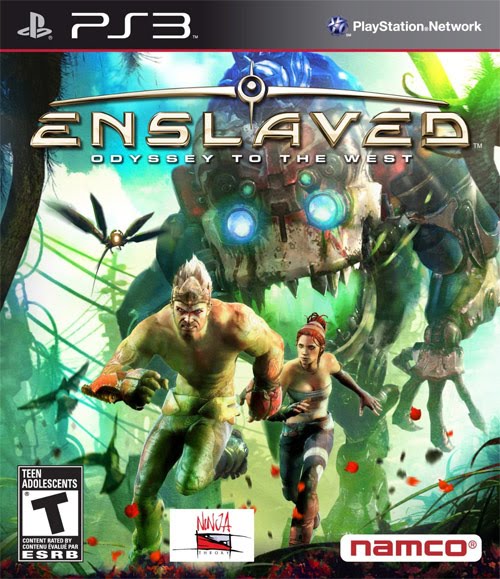
Enslaved: Odyssey to the West: One of the most engaging stories I've ever played through in a video game, Monkey and Trip's struggle for freedom and safety is a lot of fun. The game's story also features some of the most colourful and interesting characters in recent memory. It's the type of game you don't see very often (not nearly often enough in my opinion,) and it works very well, while looking beautiful. I highly recommend this one. Ninja Theory did a phenomenal job.
3 on 3: NHL Arcade: Another arcade sports game that I became incredibly addicted to. I've never played such a frenetic hockey game, or one that was as crazy as some of the games I played in 3 on 3. Think of Mario Strikers on ice and you'll have a good idea of what this three on three hockey game is like. It's a blast.
Condemned: Criminal Origins: This was the first game I beat when I first bought my XBOX 360. It was also one of the main reasons as to why I purchased the console in the first place. Early screens and gameplay videos blew me away, and the game did as well...once I got my hands on it. Condemned is a very scary game that pits you against deranged psychopaths and thugs who have been brainwashed. Featuring a unique new combat system that allows you to use weapons found in the environment, as well as your fists, to take guys out, it's a great experience. I haven't played another horror game like it.
No More Heroes: If you own a Wii, this is a must-play title. It's so uniquely interesting and engaging that it'd be a shame to miss out on it. I didn't know what to expect when I first booted it up, but I was blown away by how creative and fun it was. They also did a really good job incorporating the Wii's motion controls into the experience, without dumbing them down too much. Highly recommended. This is one of the titles that makes owning a Wii worthwhile.
Heavenly Sword: Despite its brevity, Ninja Theory's 'Ninja Sword' is a very fun action game. It's polished, beautiful, fun and mesmerizing to watch. Not to mention its colourful cast of characters and fast-paced rail sliding sections. If you're a fan of God of War or Devil May Cry, this one is definitely worth looking into. I was actually quite impressed by the inclusion of the Sixaxis controls. Being able to steer an arrow into an enemy was a blast and worked quite well.
Here is a list of some games that didn't get the recognition they deserved, but blew me away. I'll most-likely end up adding to this list in a future post because I still have some candidates in my backlog. If only there was more time in a day. Anyways, here it goes:
Singularity: Raven did a really great job with this one and it's a shame that it didn't receive more advertising. I was blown away by how fun, well-made and interesting this first-person shooter was. Not only did it have a great campaign with quite a bit of content, but it also had a decent multiplayer mode. This one made it very high on my list of 'Best Games of 2010.' It may not be the most unique game, but it's well-made, fun, interesting and plays very well. Please check it out. I haven't heard or read a bad review.
Just Cause 2: Although the original game released to mediocre reviews and moderate interest, Just Cause 2 is a major improvement. It's just about everything you'd want in a sandbox game: more things to do than you'll ever have time for, great/fun gameplay, polished mechanics and some amazing abilities. Who cares about vehicles? The grappling hook and parachute are all I need. It's a blast to use those to get around or to free-fall from a mountain and then pull the parachute at the last second.
Vanquish: To be honest, I didn't think I'd like this game much at all when I first read about it and saw gameplay footage. It didn't seem like my type of game. Boy, was I wrong. Vanquish is an incredibly fast-paced, fun and frenetic experience that grabs you from the beginning and doesn't let go until its conclusion. It borrows from other games in its genre, but adds some interesting new elements and some fun to use weapons. Fun is an understatement wit this one.
Metro 2033: I'm a huge Fallout 3 fan. It's my favourite release this generation. Perhaps that's why I liked Metro 2033 so much (as they're somewhat similar.) It was an interesting approach to the first-person shooter genre, with an amazingly engineered feeling of being alone in a dangerous world. It's not like the average first-person shooter you'll find on a rack at the local video game store, and I appreciated the fact that the developers were willing to take a chance with some of their ideas. I'm also very happy that they decided against an unnecessary, tacked on multiplayer mode. The game made me interested in reading the Russian novel it's based on.
Bully: Scholarship Edition: I still can't wrap my head around why this game is as under-appreciated as it is. I loved it. Sure, it's a different take on the Grand Theft Auto formula, but it's really well-made and designed. Not only is it unique in its setting, but its missions, modes of transportation, social aspects and minigames are also different from anything you'll find in another sandbox release - but in a good way, trust me. I don't know how I missed this one when it was released on the PS2, but I'm glad I bought it on the 360.
The Bigs: This game is for anybody who has at least a little interest in the sport of baseball. It's very accessible, fun and engaging. Not to mention competitive and fun. Create a rookie and help him earn his way through Spring Training and into The Show, in either the American League or National League. It's an arcade game in nature, so be prepared for flaming pitches, physical contact and explosive homeruns. The developers should be applauded for how they advanced the popular arcade baseball genre by implementing a very good career mode (where you can steal a player of your choice from your opponent if you win the game,) as well as the equally fun home run pinball mode, which sees you trying to hit balls at lights, signs and cars in Times Square.
Enslaved: Odyssey to the West: One of the most engaging stories I've ever played through in a video game, Monkey and Trip's struggle for freedom and safety is a lot of fun. The game's story also features some of the most colourful and interesting characters in recent memory. It's the type of game you don't see very often (not nearly often enough in my opinion,) and it works very well, while looking beautiful. I highly recommend this one. Ninja Theory did a phenomenal job.
3 on 3: NHL Arcade: Another arcade sports game that I became incredibly addicted to. I've never played such a frenetic hockey game, or one that was as crazy as some of the games I played in 3 on 3. Think of Mario Strikers on ice and you'll have a good idea of what this three on three hockey game is like. It's a blast.
Condemned: Criminal Origins: This was the first game I beat when I first bought my XBOX 360. It was also one of the main reasons as to why I purchased the console in the first place. Early screens and gameplay videos blew me away, and the game did as well...once I got my hands on it. Condemned is a very scary game that pits you against deranged psychopaths and thugs who have been brainwashed. Featuring a unique new combat system that allows you to use weapons found in the environment, as well as your fists, to take guys out, it's a great experience. I haven't played another horror game like it.
No More Heroes: If you own a Wii, this is a must-play title. It's so uniquely interesting and engaging that it'd be a shame to miss out on it. I didn't know what to expect when I first booted it up, but I was blown away by how creative and fun it was. They also did a really good job incorporating the Wii's motion controls into the experience, without dumbing them down too much. Highly recommended. This is one of the titles that makes owning a Wii worthwhile.
Heavenly Sword: Despite its brevity, Ninja Theory's 'Ninja Sword' is a very fun action game. It's polished, beautiful, fun and mesmerizing to watch. Not to mention its colourful cast of characters and fast-paced rail sliding sections. If you're a fan of God of War or Devil May Cry, this one is definitely worth looking into. I was actually quite impressed by the inclusion of the Sixaxis controls. Being able to steer an arrow into an enemy was a blast and worked quite well.
Monday, February 21, 2011
TNT Racers Review (XBOX Live Arcade)
Years ago, car combat games were one of the most popular sub-genres, with different series competing for video game consumers' attention and hard earned cash. Although those games aren't as prevalent these days, Keen Games' has attempted to resurrect the once popular game type with their latest release, TNT Racers. Developed in Germany, TNT Racers is a fast-paced, frenetic game that requires quick reflexes, memorization of its tracks and some great video game driving skills.
The main selling points for this downloadable release are its unique style, over the top gameplay and multiplayer mayhem. Although it doesn't have any storyline to speak of, the game is essentially a three-part driving competition, separated into normal, fast and turbo events. As with the Mario Kart franchise, each event category means an increase in speed and challenge. The game's forty-five different challenges are split up into three fifteen-event chunks - one for each speed or difficulty differentiation. It's a basic set-up for a racing game of this style, although there's no inherent glue to stick these events together, making the game feel somewhat lifeless. You are at least playing against three other named opponents, but the names are random, creating a lack of continuity or anything to grasp onto, such as a rival.
I personally found the name of the game to be somewhat misleading. The fact that it is called TNT Racers made me think that it was going to be a fast-paced, arcade racing experience, like Mario Kart. However, there's no real racing mode to be found in this package. Instead, each of the game's forty-five different events is separated into one of several different event types, none of which involve fighting to be the first car to reach the finish line. The only event types that are similar to a traditional racing game are two events where you must try to complete a specific task in a certain amount of time. One mode has you trying to finish a certain amount of laps and another has you doing that while avoiding cones or mines. Other events see you fighting for survival against three other players to earn points related to how long you last, picking up coins and using items to score the most points or crashing into as many objects as you can within a certain amount of time. You must earn first place to progress to the next challenge.
Instead of using a camera that closely follows the action, the developers decided to use a static overhead camera, which moves with the leader of the pack. This top down perspective is interesting, because it makes it look like you're racing toy cars and makes it child friendly. However, it also makes it difficult to know what is coming up around the next turn, sometimes. This wouldn't be as annoying if the cars controlled well, but they don't. The controls are very floaty, making it difficult to take corners perfectly, pick up coins you see on-screen or even win events. It becomes frustrating because the game requires precision driving for a lot of its events and the precision just isn't there.
Luckily, using items is quite easy and can be accomplished at the touch of a button (press A to use an item or press B to drop it so that you can pick up another one.) Like in Mario Kart, item pods are scattered around each track. When you pick them up, you get a random item, such as a candy turret, confetti mines, a tesla shield that electrocutes opposing cars or a plunger with a weight attached that will slow an enemy vehicle down. I was impressed with the variety of weapons available and their strategic uses.
The game features eighteen different tracks, which are unlocked as you progress through the game and play different modes. Several of them are just mirrored versions of other tracks, though. There is some nice variety within the design of the tracks, as they feature varied landscapes, track types and weather conditions (such as one track that features low visibility due to a sand storm.) The arctic tracks are quite slippery, which makes it harder to speed past opponents or corner perfectly, adding some depth to the experience with its added challenge. But most of the tracks are devoid of any sort of gimmick or unique qualities despite their visual appearance, and primarily play the same way. For those who like to try to get the best lap times possible, a Time Trial mode is also available.
It also features several different unlockable vehicles, in addition to the cars that are available at the beginning. The variety is nice, but the different vehicles don't feature unique abilities or stats, which I feel is a missed opportunity. It is still nice to be able to choose your favourite vehicle design and colour, though. It's just too bad that there's no strategy involved within your choice.
It is important to note that you only have one life in this game. If the leader gets too far ahead of you, then the camera will pass over you and destroy your vehicle. Your vehicle will also be destroyed if you lose all of your health (which can be replenished if you find and use a toolbox item pick-up.) However, one major change to the formula that TNT Racers presents is shadow mode. If you are taken out by an opponent or by falling too far behind (which is easily done,) then you are resurrected as a shadow. You earn smaller amounts of points in score-based modes and cannot use the regular weapon pick-ups, but this mode allows you to pick-up coins and thwart other racers. This can be done by picking up a ray gun that will slow its target down for a short period of time, or by using a hammer that stuns opponents' vehicles, even making them fly into the air for a couple of seconds. This way, players are always in on the action. I found shadow mode to be one of the better ideas implemented into this release.
Online multiplayer is available for up to four players within one match. The host is able to select a single event or tournament setting. Most of the single player modes are available online. However, I had a hard time finding a match and, when I did, it was usually just with one other player. What I did get to try of the multiplayer worked quite well, though. I didn't experience any issues with lag or any exploits.
Presentation-wise, TNT Racers is a mixed bag. It features a colourful visual palette that features some nice animated animals and effects on the tracks, as well as some nice backdrops. The cars themselves look pretty good, each with their own unique design, but some of the colours that you can choose tend to look alike (such as yellow cars looking orange.) Despite being a fast-paced game, especially during turbo challenges, the game's frame rate runs well. I didn't experience any frame rate slowdown or hiccups, which was nice.
However, the game's audio design is one of its major downsides. Playing through the game, you'll hear the same sound effects over and over again, as there isn't much variety. They sound okay, though. I wish I could say that about the game's original soundtrack though, as its jazz tunes don't really fit into the experience and can be somewhat annoying. One major issue I experienced with the sound in this game (twice actually,) was that it would occasionally cut out. The sound effects wouldn't register, then the music would cut out, and then it'd eventually be silent. I'd have to quit the game and restart it to get the sound back.
Throughout the experience, I was wondering who this game was meant to be targeted towards. Its colourful visual style and exaggerated designs are reminiscent of something that would be targeted towards families and their children. However its difficulty becomes so challenging, requiring several tries just to complete some tasks, that it just wouldn't be fun for a younger gamer to play past the normal stages. I've been playing video games for years and it took me a while to complete a few of the challenges. The difficulty really ramps up starting at its mid-way point. The game suffers from an identity crisis for these reasons. It's far too challenging to be marketed towards children and it's a game type that most veteran gamers won't have much interest in.
I don't want to make it seem like TNT Racers is a horrible game. It's just that there isn't much to recommend about it. Everything about the experience is safe and has been played before over and over again in superior games such as Diddy Kong Racing or Twisted Metal. But, with that being said, TNT Racers isn't a broken game and it features quite a bit of content. There is fun to be had, especially with friends, but its frustrating difficulty may dismay some gamers. If it had seen more time in development and had some unique design ideas added into it, it could've been a sleeper hit. However, it's unfortunately just an uninspired game that will most-likely end up falling through the cracks into anonymity.
Rating: 5/10
TNT Racers was released for the XBOX Live Arcade on February 9, 2011. It is also scheduled to be released on the PlayStation 3, PSP and WiiWare.
Pokemon Black and White Event Recap + Early Impressions (Nintendo DS)
This past weekend, I attended a Pokemon Black and White event put on by Nintendo, in Mississauga, Ontario. Taking place at the International Centre (a large convention centre,) the event was a part of the annual Toronto Kids' Fest convention. Representatives from Nintendo set up a booth, which featured several Nintendo DSi handhelds for demonstration purposes, as well as two LCD screens and a face painting area for the kids. Pikachu was also in attendance to meet the children who lined up in droves for their chance to play the game and/or have their face painted. It was a great way to appeal to the series' main target audience. Judging from what I saw when I walked around, Nintendo's booth was by far the most popular attraction at the convention, with only the jumping castle as its close competition.
Shortly after I arrived, I was allowed a chance to sit down and play a short demo of each version of the game. The demos were timed to end at a specific part of the game, lasting several minutes each. However, I took time to walk through the grass to engage in random battles in each demo, so that I could add some length to my trial experience. Despite the demonstrations' brevity, I was quite impressed with what I saw and played.
Both versions of the game are quite similar, apart from some minor differences such as different Pokemon. Because of this, the two demos were very similar. They took place during a section of the game where the main character is getting ready to approach the Darkspire Tower, which is supposed to be the residence of some legendary Pokemon species. This trial had me speaking to a few different members of a small town, engaging in a battle with my rival, as well as a battle with one other member of the town, before approaching the bridge leading to the tower. Luckily, there was also a strip of grass available to use for random battles.
When I would enter battle in each game, I was given three different Pokemon with varying abilities to use - each around level 20. The enemies I faced were weaker than my team, so it wasn't very hard to defeat them, but I tried to use as many different abilities and Pokemon as possible. Each battle I fought was a traditional battle, but I have heard that there will be triple battles within the game that will force you to send out half of your team against enemies. However, the regular battles I saw featured new animations, featuring animated Pokemon sprites that would move their tails while they waited and would animate well during their attacks.
Visually, Pokemon Black and White looks really nice. It's impressive to think of how far along the series has come since its days on the Game Boy. The series' colourful visual palette returns and looks great. The character models were well-done and varied. The game also features different seasons, for the first time in the series (in addition to a day/night cycle.) The section I played took place during springtime and the green grass and foliage popped. The seasonal cycle not only changes the look of the game drastically (with each of the four seasons lasting one month in duration,) but it also changes the types of Pokemon you'll find in the wild. Some locations on the map will also only be available during specific seasons. This is a pretty large change, which I look forward to playing with, as it should change the dynamics of the games quite a bit.
The control scheme is primarily the same as it was in previous DS Pokemon releases. The top screen shows the battle (with animated sprites, stats, etc.) and the bottom touchscreen is used to control moves, switch Pokemon, use items or run. If you don't like to use the touchscreen, you can toggle through the menu on the bottom screen with the directional pad, but I found that was clunky compared to the ease of using my finger or a stylus. Moving through the world with the directional pad was easy and I found that exploration worked quite well.
I'm really looking forward to playing through it in early March. I've been a fan of the Pokemon games for years and have grown up playing them, since my cousin introduced me to Pokemon Red years ago. Black and White add some interesting new changes to the series' great, tried and true gameplay formula.
Here are some more details, changes and facts about the game:
- The game takes place in a region (Unova) far away from those in other games, which is only accessible through airplane or boat. It is a much more industrialized area and features a larger population.
- The camera is much more adaptive during battles. It will zoom in and out and change its viewpoint.
- Poke Marts and Global Terminals are now placed in Pokecentres
- The game features a three-dimensional city and three-dimensional bridge designs
- There is a new Miracle Shooter function available for multiplayer battles. It allows you and your opponents to use items during battles. This works on a points-based system.
- You can transfer Pokemon through all of the DS Pokemon games - Black and White included.
Pokemon Widget
Pokemon Black and White will be available for the Nintendo DS on March 6, 2011.
Subscribe to:
Posts (Atom)